

Most property managers believe a visually stunning website automatically attracts leads. The reality? Over 70% of successful lead generation comes from SEO-focused site architecture and content rather than design alone. For Melbourne property managers competing in a crowded market, combining strategic local SEO with conversion-optimized web design is the proven path to consistent inquiries.
Table of Contents
- Why Property Management Websites Must Be Optimized for Melbourne's Local Market
- Website Performance Essentials: Speed, Mobile Optimization, and Usability
- Local SEO Strategies Tailored for Melbourne Property Management
- Content Strategies That Engage Local Property Owners and Boost Ranking
- Conversion Optimization: Calls to Action, Trust Signals, and User Journey Design
- Technical SEO Essentials: Schema, Error Fixes, and Site Health
- Common Misconceptions and Pitfalls in Property Management Web Design and SEO
- Integrating Website Essentials for Sustainable Growth and Lead Generation
- Boost Your Melbourne Property Management Website Today
- FAQ
Key Takeaways
| Point | Details |
|---|---|
| Local SEO foundations | Melbourne property managers need websites built with local search visibility from day one to capture qualified leads. |
| Performance matters | Fast loading speeds and mobile optimization directly impact visitor retention and search rankings. |
| Strategic content | Localized blog posts and neighborhood-specific pages build trust with property owners while boosting organic traffic. |
| Conversion focus | Clear calls to action and trust signals like reviews transform website visitors into actual inquiries. |
| Technical backend | Schema markup and regular site health audits enhance search visibility and click-through rates. |
Why Property Management Websites Must Be Optimized for Melbourne's Local Market
Melbourne's property management sector operates in an intensely competitive local environment. Property owners searching for management services overwhelmingly rely on Google to find providers, making local search visibility critical. 75% of property owners prefer engaging with property managers who appear prominently in local search results.
Your website serves as your primary lead generation tool, often working harder than referrals or traditional advertising. High visibility in Melbourne-specific search results directly correlates with inquiry volume. Property owners typically research multiple options before making contact, so appearing in the top local results gives you a crucial first-mover advantage.
Integrating local SEO from website launch delivers better results than retrofitting it later. A combined website design and local SEO strategy ensures your site architecture supports visibility from day one. Key advantages include:
- Targeted traffic from property owners actively searching in your service areas
- Higher conversion rates from geographically qualified visitors
- Sustained lead flow without constant paid advertising spend
- Competitive positioning against larger franchise operations
Website Performance Essentials: Speed, Mobile Optimization, and Usability
Site speed impacts everything from visitor patience to Google rankings. Property owners researching management options will abandon slow-loading sites within seconds, immediately moving to competitors. Every additional second of load time increases bounce rates and decreases the likelihood of inquiry submissions.
Mobile optimization is non-negotiable. Over 60% of property management website traffic in Australia originates from mobile devices, meaning most potential clients first encounter your business on smartphones. Sites that don't adapt properly to smaller screens frustrate users and lose leads.
Core performance priorities include:
- Load times under 3 seconds on both desktop and mobile
- Responsive design that adapts seamlessly to all screen sizes
- Touch-friendly navigation and clickable elements sized appropriately
- Readable text without requiring zooming or horizontal scrolling
- Compressed images that maintain quality while loading quickly
Pro Tip: Test your site speed using Google PageSpeed Insights and your mobile experience on actual devices, not just desktop browsers in responsive mode. Real-world testing reveals issues automated tools miss.
Usability extends beyond technical performance to intuitive navigation and clear information hierarchy. Property owners should find key details like service areas, pricing structures, and contact options within seconds. Following SEO basics for your website and maintaining a checklist for fast, mobile-optimized sites keeps performance aligned with both user expectations and search engine requirements. Reference mobile traffic data to understand how critical mobile optimization has become.
Local SEO Strategies Tailored for Melbourne Property Management
Effective local SEO starts with targeted keyword research focused on Melbourne-specific search terms. Property owners search using phrases like "property management Melbourne," "rental property manager Bayside," or "strata management South Yarra." Your website content must naturally incorporate these location-specific terms to match search intent.
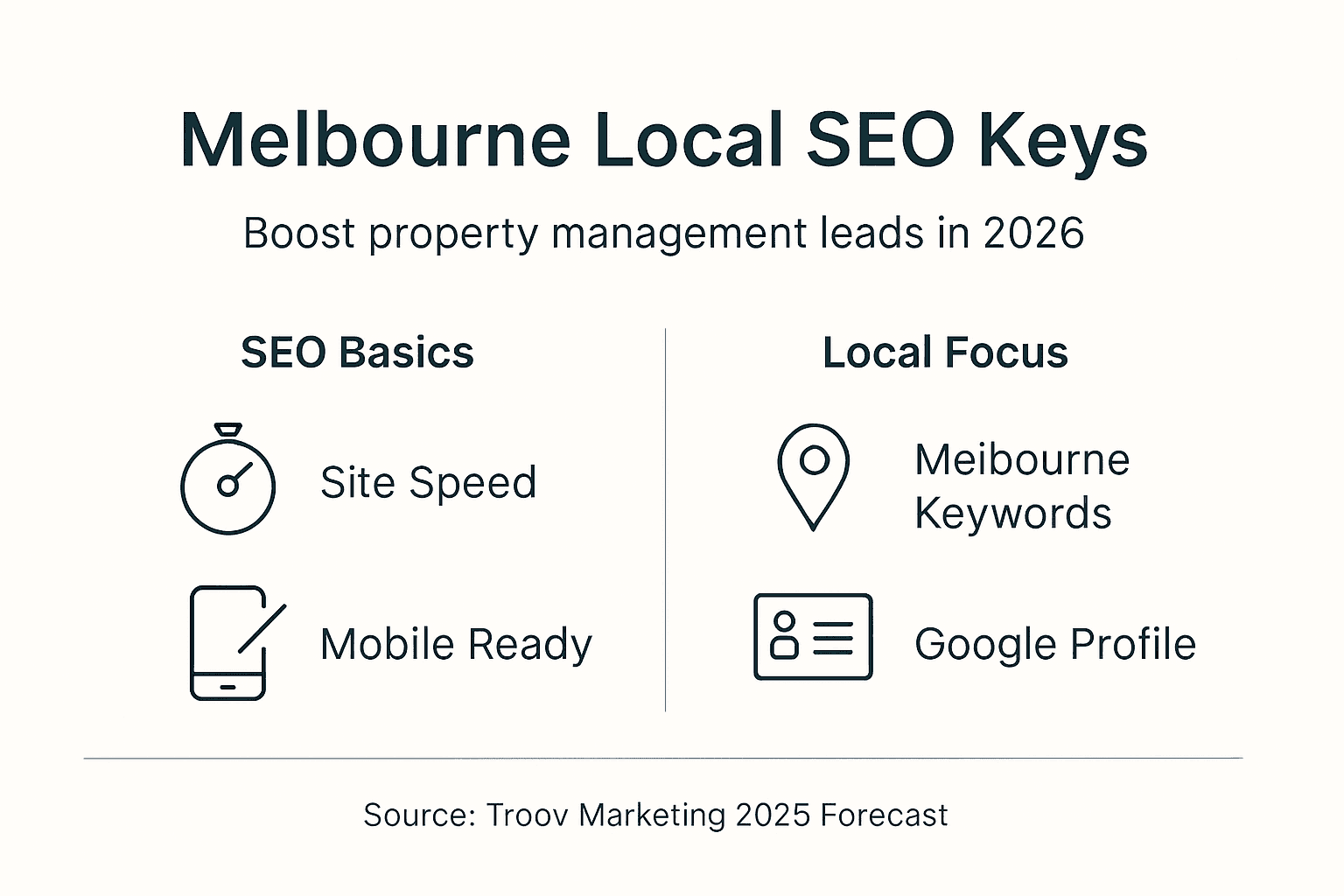
Google Business Profile optimization directly impacts local visibility. Optimized Google Business Profiles increase local inquiries by up to 30% by placing your business prominently in map results where property owners make quick comparisons. Your profile needs regular attention to maintain competitive positioning.
Implement these local SEO fundamentals:
- Claim and verify your Google Business Profile for all service locations
- Upload high-quality photos of your team, office, and managed properties
- Encourage satisfied clients to leave detailed Google reviews
- Keep business information updated, especially contact details and service hours
- Post regular updates about market insights or service additions
- Use neighborhood-specific content pages targeting individual Melbourne suburbs
- Build location pages for each primary service area with unique, relevant content
Pro Tip: Don't just list suburbs you serve. Create dedicated pages with genuine neighborhood insights, local market data, and area-specific property management considerations. Google rewards substantive local content over thin location pages.
Follow the Google Business Profile optimization guide for step-by-step implementation. Understanding local SEO for Melbourne property management helps you build sustainable visibility. Check Moz local SEO insights for evolving best practices.
| Local SEO Element | Impact on Visibility | Implementation Priority |
|---|---|---|
| Google Business Profile | High | Immediate |
| Location-specific pages | High | First month |
| Local keyword integration | Medium | Ongoing |
| Customer reviews | High | Continuous |
| Neighborhood content | Medium | Monthly updates |
Content Strategies That Engage Local Property Owners and Boost Ranking
Content marketing builds trust while improving organic search visibility. Property owners researching management options seek answers to specific questions about fees, processes, tenant screening, and maintenance handling. A blog targeting common property owner questions can increase organic traffic by 70% over 6 months.
Geographically specific content attracts qualified local traffic. Articles about Melbourne rental market trends, suburb-specific investment insights, or Victorian tenancy law updates demonstrate local expertise while naturally incorporating location keywords. This positions you as a knowledgeable local resource, not just another service provider.
Effective content approaches include:
- Monthly blog posts addressing seasonal property management topics relevant to Melbourne
- Neighborhood guides highlighting rental demand, tenant demographics, and property values
- FAQ content answering common property owner concerns about management services
- Case studies featuring successful property management outcomes in specific Melbourne areas
- Market update posts sharing rental price trends and vacancy rates by suburb
Content freshness matters for SEO. Regular updates signal to Google that your site remains active and relevant. Even updating existing pages with current statistics or expanded information helps maintain rankings. Following effective blogging practices ensures your content efforts generate actual business results. Review blogging benefits for local SEO to understand the cumulative traffic gains quality content delivers.
Conversion Optimization: Calls to Action, Trust Signals, and User Journey Design
Attracting visitors means nothing without converting them into inquiries. Well-placed CTAs can increase lead inquiries by up to 50% by guiding visitors toward contact actions at moments of high intent. Your website must make inquiry submission effortless and appealing.

Clear calls to action appear strategically throughout your site, not just on a contact page. Every service description, blog post, and neighborhood guide should include relevant CTAs matched to visitor intent. Someone reading about fees needs a different CTA than someone comparing property management approaches.
Trust signals reduce hesitation about making contact. Property owners entrust significant assets to managers, so credibility matters intensely. Visible reviews, client testimonials, industry certifications, and professional association memberships all reduce perceived risk.
Conversion elements to implement:
- Prominent phone numbers and contact forms above the fold on all key pages
- Testimonials from satisfied property owners with specific results mentioned
- Trust badges showing industry memberships and certifications
- Clear service descriptions that address property owner pain points directly
- Simple contact forms requesting only essential information
- Click-to-call buttons optimized for mobile users
Pro Tip: Match CTA language to page context. On a blog about tenant screening, use "Get Our Tenant Screening Process" rather than generic "Contact Us" language. Specific, benefit-oriented CTAs convert better.
User journey design considers how different visitor types navigate your site. First-time researchers need educational content and credibility signals. Return visitors ready to act need frictionless contact options. Review the website checklist for conversion optimization and conversion-focused web design examples for implementation ideas. Understand call to action research to optimize placement and messaging.
Technical SEO Essentials: Schema, Error Fixes, and Site Health
Backend technical factors significantly impact search visibility despite being invisible to visitors. Implementing service-specific schema markup improves search appearance and click-through rates by helping Google understand and display your business information more effectively in search results.
Schema markup for property management services tells search engines exactly what you offer, your service areas, pricing structures, and customer reviews. This structured data enables rich snippets that make your listings more prominent and informative than competitors without schema implementation.
Regular technical maintenance prevents ranking drops:
- Monthly crawl error checks using Google Search Console
- Broken link identification and fixing to prevent poor user experience
- Meta title and description optimization for all important pages
- XML sitemap updates ensuring Google finds new content quickly
- Site speed audits addressing performance degradation over time
- Mobile usability testing identifying device-specific issues
Maintaining healthy site architecture supports both user experience and search visibility. Clear URL structures, logical internal linking, and organized content hierarchies help visitors and search engines navigate efficiently. Using tools for site health management simplifies ongoing maintenance. Understanding SEO basics for site health prevents common technical pitfalls. Reference schema markup benefits for implementation guidance.
| Technical Element | SEO Impact | Maintenance Frequency |
|---|---|---|
| Schema markup | High | Quarterly review |
| Crawl error fixes | High | Monthly |
| Meta tag optimization | Medium | Ongoing |
| Site speed | High | Quarterly audit |
| Mobile usability | High | After major updates |
Common Misconceptions and Pitfalls in Property Management Web Design and SEO
Many property managers invest heavily in visually impressive websites while neglecting the SEO foundations that actually generate inquiries. Beautiful design creates good first impressions, but visitors must find your site before they can appreciate its aesthetics. Prioritizing visual appeal over search visibility wastes marketing budgets.
Another common mistake involves using generic, non-localized content. Template text about "property management services" without Melbourne-specific details fails to compete against competitors who demonstrate genuine local knowledge. Google prioritizes locally relevant content for location-based searches.
Key misconceptions to avoid:
- Believing website design alone drives lead generation without SEO support
- Treating Google Business Profile as optional rather than essential
- Expecting immediate results from SEO instead of allowing time for ranking improvements
- Copying competitor content rather than creating unique, valuable information
- Ignoring mobile users despite majority traffic coming from smartphones
- Viewing blogging as unnecessary when it consistently generates compounding traffic
"The biggest mistake property managers make is building websites for themselves rather than for property owners searching online. Your personal preferences don't matter if potential clients can't find you."
Avoiding these pitfalls requires understanding how property owners actually search for and evaluate management services online. Review common website mistakes to identify issues potentially affecting your current site.
Integrating Website Essentials for Sustainable Growth and Lead Generation
Successful property management websites integrate technical performance, local SEO, valuable content, and conversion optimization into a cohesive system. Each element reinforces the others, creating compound benefits over time. Fast, mobile-optimized design supports user experience and rankings. Local SEO content attracts qualified traffic. Clear CTAs convert visitors into inquiries.
Consistent maintenance matters more than one-time optimization. Search algorithms evolve, competitor strategies change, and local market conditions shift. Regular content updates, Google Business Profile management, and technical audits maintain competitive positioning.
Sustainable growth strategies include:
- Monthly blog posts targeting evolving property owner questions and local market topics
- Quarterly Google Business Profile updates with fresh photos and service information
- Ongoing review generation encouraging satisfied clients to share experiences
- Regular site speed and mobile usability checks ensuring performance standards
- Annual content audits updating statistics and information for continued relevance
View your website as an asset requiring ongoing investment, not a one-time project. Property managers who commit to consistent optimization see steady inquiry growth while competitors relying on static sites gradually lose visibility. The ultimate website checklist provides a comprehensive framework for maintaining all essential elements.
Boost Your Melbourne Property Management Website Today
Troov Marketing specializes in building high-performing websites for Melbourne property managers that combine fast, mobile-optimized design with integrated local SEO. We understand the unique challenges property management businesses face in attracting qualified inquiries online.
Our approach focuses on sustainable foundations rather than quick fixes. We build sites structured for local search visibility from day one, then provide ongoing support to maintain and improve performance over time. From Google Business Profile optimization to conversion-focused design, we handle the technical complexities so you can focus on managing properties.
Ready to transform your online presence? Explore our Melbourne small business web design services, learn more about professional website design and local SEO, or review our website optimization checklist to assess your current site's performance.
FAQ
What are the essential website features for property management in Melbourne?
Fast loading speeds, mobile optimization, and clear calls to action form the foundation. Trust signals like client testimonials and reviews build credibility. Location-specific content targeting Melbourne suburbs improves local search visibility. Integration with an optimized Google Business Profile amplifies local reach.
How does Google Business Profile optimization increase local inquiries?
Optimized Google Business Profiles increase local inquiries by up to 30% by placing your business in the prominent map pack results property owners see first. Accurate information, professional photos, and genuine reviews attract clicks while building trust. Regular updates signal active business management. Follow Google Business Profile optimization steps for maximum impact.
What common mistakes should I avoid when designing my property management website?
Relying on visual design over SEO structure and content creates beautiful sites nobody finds. Using generic, non-localized content fails to compete for Melbourne-specific searches. Neglecting Google Business Profile optimization surrenders valuable map pack visibility to competitors. These mistakes cost qualified inquiries daily. Review the common website mistake guide to identify issues affecting your site.
How long does it take to see results from local SEO efforts?
Initial improvements in Google Business Profile visibility often appear within weeks. Organic search ranking improvements for competitive keywords typically require three to six months of consistent effort. Content marketing benefits compound over time, with established blogs generating increasing traffic as more posts accumulate authority. Patience and consistency deliver better long-term results than expecting immediate rankings.