

Your website might be silently costing you customers. Businesses with regularly updated websites see local search rankings improve by over 50%, yet many Melbourne small businesses let their sites stagnate for years. The digital landscape shifts constantly, and your online presence needs to keep pace. Modern customers expect fast, mobile-friendly sites with accurate information, and search engines reward websites that meet these standards. Combining strategic website design and local SEO creates a powerful tool for attracting local customers and growing your business.
Table of Contents
- Introduction: The Business Case For Website Updates
- Why Website Updates Matter For Local SEO
- Enhanced User Experience Through Website Updates
- Credibility And Customer Trust Through Website Updates
- Security And Technical Updates To Protect Rankings
- Common Misconceptions About Website Updating
- Balancing Frequency And Risks Of Website Updates
- Conclusion: Making Website Updating Work For Your Business
- Enhance Your Melbourne Business Website With Troov Marketing
- Frequently Asked Questions
Key Takeaways
| Point | Details |
|---|---|
| Local SEO Impact | Regular website updates can improve local search rankings by over 50% |
| Mobile-First Priority | Sites optimized for mobile see 25% more local traffic from smartphone searches |
| Security Protection | Technical updates prevent vulnerabilities that damage SEO rankings and customer trust |
| Update Strategy | Incremental updates reduce risk and optimize costs better than major redesigns |
| Customer Retention | Outdated websites increase bounce rates and reduce engagement with potential customers |
Introduction: The Business Case for Website Updates
Your website isn't a set-and-forget marketing tool. Technology changes rapidly, customer expectations evolve, and search algorithms update constantly. A website that worked perfectly two years ago might now load slowly on mobile devices, lack modern security features, or contain outdated business information that confuses potential customers.
Local SEO algorithms prioritize websites that show current, accurate business details and demonstrate active management. Search engines interpret regular updates as signals that your business is active and relevant. Without these signals, your rankings gradually decline, pushing you below competitors who maintain their online presence.
Consider these realities for Melbourne small businesses:
- Websites naturally age and lose effectiveness without maintenance
- Local SEO strategies depend on current information synchronized across platforms
- Customer expectations around website speed and mobile experience have risen dramatically
- Mobile-first design is now essential for capturing local searches from smartphones
Partnering with a small business web designer Melbourne understands these dynamics ensures your site stays competitive. The cost of neglecting updates far exceeds the investment in maintaining a modern, effective website that converts visitors into paying customers.
Why Website Updates Matter for Local SEO
Local search visibility directly impacts your bottom line. When potential customers search for services in Melbourne, search engines evaluate hundreds of factors to determine which businesses appear first. Regular website updates influence many of these ranking signals, creating compounding benefits over time.
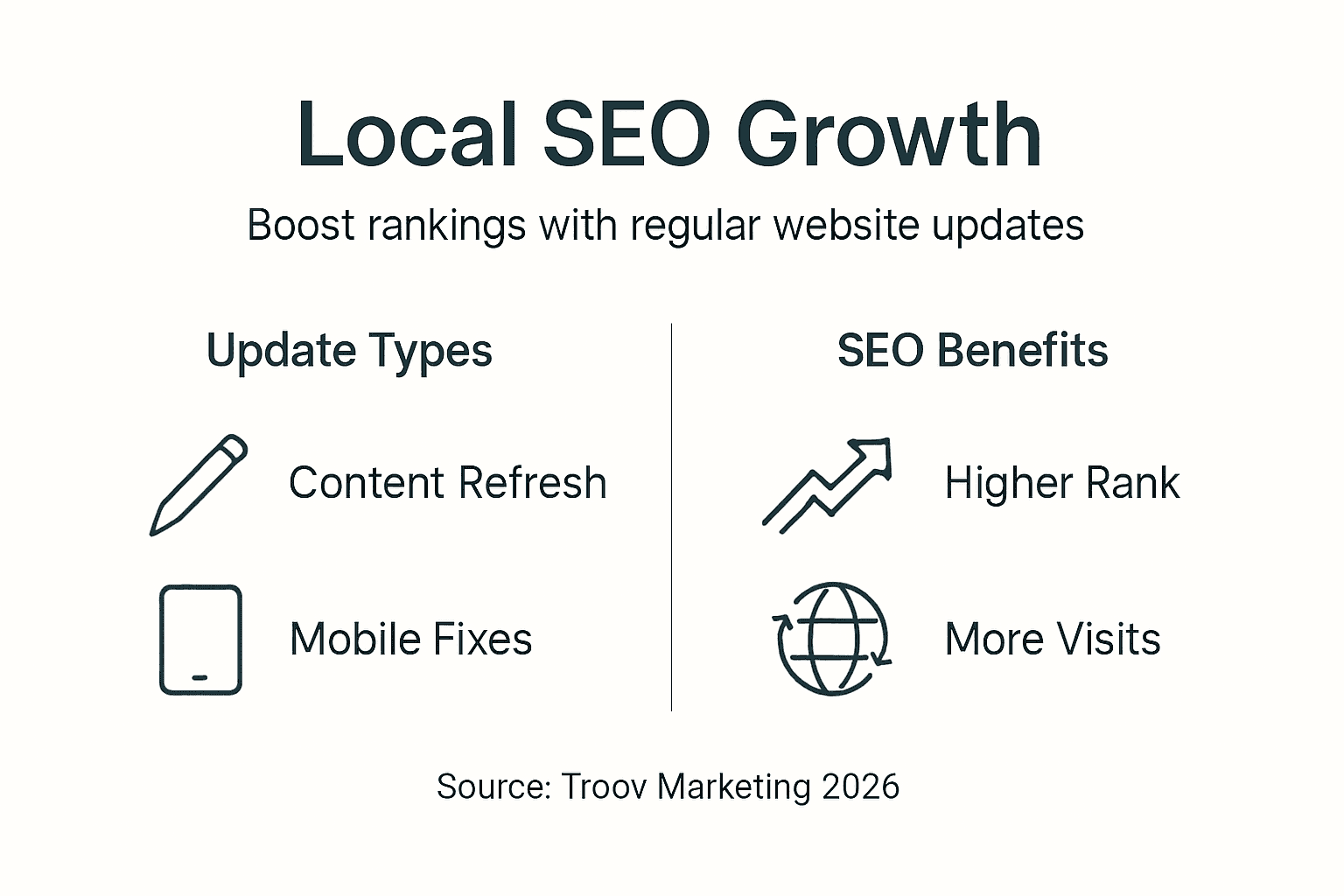
Businesses that maintain synchronized information between their website and Google Business Profile see measurable performance improvements. The data shows businesses with updated profiles and websites see local search performance improve by over 50%. This synchronization tells search engines your business information is reliable and current, boosting your credibility in ranking algorithms.
Search engines reward several update-related factors:
- Fresh content signals an active, relevant business
- Accurate contact details and service descriptions improve user experience
- Proper structured data helps search engines understand your business category and location
- Regular technical improvements demonstrate professional website management
- Updated location and hours information reduces customer frustration
Integration between your website and Google Business Profile optimization creates a powerful local SEO foundation. When both platforms contain identical, current information, search engines trust your data more and rank you higher for relevant local searches.
| Update Type | SEO Impact | Implementation Frequency |
|---|---|---|
| Business Information | High | Immediately when changed |
| Service Descriptions | High | Quarterly review |
| Blog Content | Medium | Monthly additions |
| Technical Improvements | High | Ongoing maintenance |
| Image Optimization | Medium | During content updates |
Pro Tip: Review local SEO statistics annually to understand emerging trends and adjust your update strategy accordingly.
Effective website design and local SEO work together. Technical updates maintain your site's performance, while content updates keep information relevant. This combination creates sustainable visibility in local search results.
Enhanced User Experience Through Website Updates
Search visibility means nothing if visitors leave immediately after arriving. User experience determines whether traffic converts into enquiries and sales. Website updates focused on usability improvements directly impact engagement metrics that search engines monitor.
Mobile devices dominate local searches. Research shows 63% of local searches happen on mobile devices, and sites optimized for mobile-first design see 25% more local traffic. Your website must load quickly and function perfectly on smartphones, or you lose potential customers before they engage with your content.

Page speed improvements yield immediate results. Visitors expect websites to load in under three seconds. Every additional second of loading time increases bounce rates significantly. Regular performance updates compress images, optimize code, and implement caching strategies that keep your site fast.
Key user experience improvements include:
- Responsive design that adapts seamlessly to any screen size
- Simplified navigation that helps visitors find information quickly
- Clear calls to action that guide visitors toward enquiries
- Readable fonts and appropriate color contrast for accessibility
- Form optimization that makes contact easy on mobile devices
Pro Tip: Test your website regularly on actual smartphones and tablets, not just desktop browsers with mobile emulation. Real-world testing reveals usability issues that simulations miss.
Improving mobile functionality requires ongoing attention. New devices launch constantly with different screen sizes and capabilities. Following mobile web design tips keeps your site compatible with the latest technology and user expectations.
Better user experience creates a virtuous cycle. Visitors stay longer, explore more pages, and complete more enquiries. Search engines notice these positive engagement signals and reward your site with higher rankings, bringing even more qualified traffic.
Credibility and Customer Trust Through Website Updates
First impressions matter enormously online. Visitors form opinions about your professionalism within seconds of landing on your website. Outdated design, broken links, or incorrect information immediately undermine trust and send potential customers to competitors.
Modern design signals that your business stays current with industry standards. A website that looks like it was built a decade ago suggests your business practices might also be outdated. Customers associate visual quality with service quality, whether or not that correlation is fair.
Accurate information builds confidence throughout the customer journey:
- Current service offerings show you adapt to market demands
- Correct contact details prevent frustration and missed opportunities
- Updated portfolio or case studies demonstrate ongoing work
- Recent blog posts prove your expertise remains relevant
- Working contact forms show you maintain professional systems
Consistent branding reinforces reliability. When your website matches your other marketing materials, customers recognize a cohesive professional operation. Inconsistency raises doubts about your attention to detail and organizational capabilities.
Trust directly influences conversion rates. Visitors who trust your professionalism are significantly more likely to request quotes, schedule consultations, or make purchases. This trust develops through every aspect of your website presentation, from design quality to information accuracy.
Avoiding common website mistakes protects your credibility. Small errors accumulate into major trust issues. Regular reviews catch problems before they damage your reputation with potential customers.
Security and Technical Updates to Protect Rankings
Security vulnerabilities pose serious risks to both your business and your search rankings. Search engines actively penalize websites with security issues, protecting users from potential harm. A single security breach can tank your SEO performance for months while you recover.
Data breaches destroy customer trust permanently. When your website leaks customer information due to outdated security, affected customers rarely return. Word spreads quickly, damaging your reputation throughout your local market. Prevention through regular updates costs far less than recovery from breaches.
Search engines monitor security signals closely:
- SSL certificates encrypt data and boost search rankings
- Software patches close vulnerabilities hackers exploit
- Regular backups enable quick recovery from attacks
- Security plugins block malicious traffic and attempts
Regular platform and plugin updates maintain website stability. Content management systems release updates frequently to fix bugs and improve performance. Delaying these updates risks compatibility issues, functionality breaks, and security exposures.
Implementing routine security and technical updates:
- Schedule monthly security audits to identify vulnerabilities
- Apply platform and plugin updates within one week of release
- Test all functionality after updates to catch compatibility issues
- Monitor site performance metrics to detect problems early
- Maintain current backups to enable quick restoration if needed
Using professional website management tools simplifies security maintenance. Automated monitoring alerts you to issues immediately, while scheduled updates ensure nothing falls through the cracks.
Technical health directly impacts user experience and search rankings. Fast loading times, reliable functionality, and secure connections all depend on current technology. Neglecting technical updates creates a cascade of problems that ultimately cost more time and money to fix.
Common Misconceptions About Website Updating
Many small business owners hold mistaken beliefs about website updates that lead to poor decisions. Understanding what actually works helps you invest time and resources effectively.
Frequency alone doesn't improve SEO. Publishing low-quality content daily provides less value than publishing excellent content monthly. Search engines prioritize relevance and usefulness over sheer volume. Strategic updates targeting specific goals outperform unfocused activity.
Major redesigns carry significant risks compared to incremental improvements. Complete overhauls disrupt established SEO rankings, break existing links, and require extensive testing. You might lose months of search visibility while search engines recrawl and reassess your new site structure.
Ignoring updates guarantees gradual decline:
- Security vulnerabilities accumulate as new threats emerge
- Technology becomes outdated and incompatible
- Search rankings slip as competitors maintain their sites
- Customer expectations move beyond your site's capabilities
| Approach | SEO Risk | Downtime | Cost | Effectiveness |
|---|---|---|---|---|
| Major Redesign | High | Days to weeks | High | Variable |
| Incremental Updates | Low | Minimal | Moderate | Consistent |
| No Updates | Very High | Unexpected | Compounding | Declining |
Quality and strategy matter more than radical changes. Small, targeted improvements compounded over time create better results than dramatic overhauls. You maintain rankings, preserve user familiarity, and reduce technical risks.
Avoiding website update misconceptions protects your investment. Many expensive mistakes stem from following outdated advice or misunderstanding how search engines actually evaluate websites.
Balancing Frequency and Risks of Website Updates
Finding the right update rhythm requires balancing SEO benefits against practical constraints. Too many changes create instability and testing burdens. Too few updates let your site fall behind competitors and technology changes.
Incremental updates minimize SEO disruption. Making small, focused changes allows search engines to process updates without triggering major reassessments of your site. You maintain ranking stability while continuously improving performance.
Optimal update frequency depends on several factors:
- Business size and available resources for management
- Industry competitiveness and customer expectations
- Technical complexity of your website platform
- Specific goals like launching new services or entering new markets
Planning with professional support reduces risks significantly. Experienced designers and developers understand which changes carry SEO risks and how to implement updates safely. They test thoroughly before making changes visible to search engines and customers.
Monitoring post-update performance guides future strategy. Track key metrics like organic traffic, bounce rates, and conversion rates after each update. This data reveals which improvements deliver results and which need adjustment.
Effective scheduling website updates creates predictable maintenance routines. Regular schedules prevent neglect while avoiding the chaos of reactive crisis management. You stay ahead of problems instead of constantly firefighting.
Conclusion: Making Website Updating Work for Your Business
Regular, strategic website updates drive measurable business growth through improved local discoverability and customer engagement. The evidence clearly shows that maintained websites outperform neglected ones across every important metric, from search rankings to conversion rates.
Small, consistent improvements outperform large infrequent changes. This approach minimizes risks, maintains SEO stability, and allows continuous adaptation to changing technology and customer expectations. You build momentum over time rather than disrupting progress with dramatic overhauls.
Partnering with experts who understand local Melbourne markets ensures your updates deliver real results. Professional website update services from Troov Marketing provide the technical expertise and strategic guidance that transform website maintenance from a burden into a growth engine for your business.
Enhance Your Melbourne Business Website with Troov Marketing
Troov Marketing specializes in helping Melbourne small businesses maintain competitive websites that convert visitors into customers. Our expertise in mobile-first design and local SEO ensures your site performs well where it matters most: local searches from potential customers ready to buy.
We provide comprehensive website maintenance and management support tailored to small business needs and budgets. Whether you need regular content updates, technical maintenance, or strategic improvements to boost local visibility, our team delivers reliable, professional service.
Start improving your website today using our proven resources. Download our website maintenance checklist to identify immediate priorities. Explore our small business web design services to see how we help Melbourne businesses thrive online. Learn about effective website management tools that simplify ongoing maintenance.
Frequently Asked Questions
Why is it important to update my website frequently?
Frequent updates prevent SEO ranking drops by demonstrating to search engines that your business remains active and relevant. Regular updates also deliver functional improvements and security patches that protect your site from vulnerabilities. Search engines favor websites that show consistent management and current information aligned with user search intent.
How do website updates impact local SEO in Melbourne?
Updated business information synchronized between your website and Google Business Profile significantly boosts local rankings and customer discovery rates. Search engines prioritize websites with fresh, relevant content that matches current user needs. Accurate service descriptions, contact details, and location information help search engines confidently display your business to nearby customers searching for your services.
What are the risks of skipping regular website updates?
Skipping updates exposes your business to data breaches through unpatched security vulnerabilities, search engine penalties for outdated technology, and losing customers to competitors with modern websites. Your SEO rankings gradually decline as search engines favor actively maintained sites. Maintaining your website's technical and content health protects your online presence and preserves the investment you've made in digital marketing.
Is a full website redesign better than incremental updates?
Incremental updates minimize downtime and maintain SEO consistency by allowing search engines to process changes gradually without triggering major reassessments. Full redesigns can hurt rankings temporarily and require longer recovery periods as search engines recrawl your entire site. Unless your website has fundamental structural problems, incremental improvements deliver better results with lower risk and more predictable outcomes.
How can I ensure my website updates improve customer engagement?
Focus updates on mobile-friendly designs and fast loading times, since most local searches happen on smartphones. Make content relevant to customer needs and easy to navigate with clear calls to action. Test regularly on actual mobile devices to identify usability issues. Monitor engagement metrics like bounce rates and time on site to measure whether updates achieve their intended impact.