
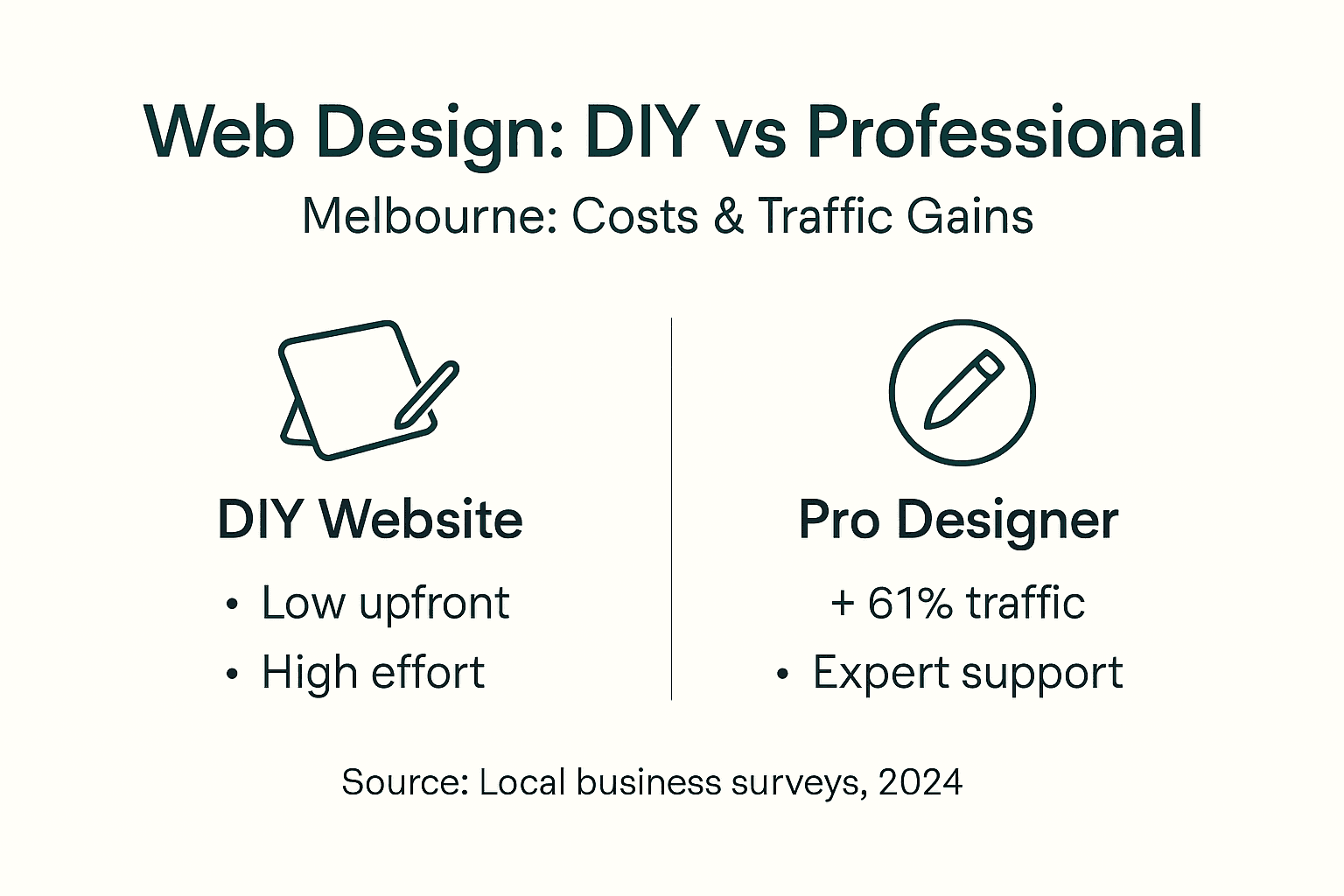
Small businesses with professionally designed websites see an average 61% increase in traffic compared to DIY sites. Many Melbourne small businesses struggle to attract local customers online, despite offering quality services. This guide reveals how hiring a professional web designer improves visibility, streamlines management, and supports scalable growth for your business.
Table of Contents
- Understanding The Importance Of Professional Web Design
- How Professional Designers Boost Local Visibility Through SEO
- Scalability And Manageability: Building For The Future
- Common Misconceptions About DIY Versus Professional Design
- Direct Benefits: Improving User Experience And Customer Engagement
- Cost Benefit Analysis Of Hiring A Professional Web Designer
- Implementing Professional Web Design: What To Expect
- Explore Professional Web Design Services With Troov Marketing
- FAQs About Choosing A Professional Web Designer
Key Takeaways
| Point | Details |
|---|---|
| Traffic Growth | Professional design can boost online traffic by 61% through SEO optimization and user experience improvements. |
| Local Visibility | Expert designers integrate local SEO and Google Business Profile to increase map pack rankings. |
| Scalable Management | Modular architecture and intuitive CMS tools make website updates simple as your business grows. |
| User Engagement | Mobile responsiveness and fast loading times reduce bounce rates and improve customer inquiries. |
| Long Term ROI | Professional design delivers higher returns through better conversions and reduced technical downtime. |
Understanding the Importance of Professional Web Design
Professional web design extends far beyond choosing attractive colors and layouts. It encompasses technical elements like SEO structure, page speed optimization, and scalable architecture that support business growth. Quality design builds trust and credibility with local customers who judge your professionalism within seconds of landing on your site.
Investing in professional web design enhances website loading speed, reducing bounce rates by up to 25% among local customers searching via mobile. Fast loading times directly impact whether potential customers stay or leave immediately. Search engines reward speed with better rankings, creating a compound effect on visibility.
Professional designers understand how to structure sites for search engines while maintaining excellent user experience. They implement proper heading hierarchies, optimized images, and clean code that search engines can easily crawl. This foundation supports all future marketing efforts.
Key elements professional designers focus on include:
- SEO optimized site structure with proper metadata and schema markup
- Mobile responsive design that works flawlessly across all devices
- Fast loading speeds through image optimization and efficient code
- Intuitive navigation that guides visitors toward inquiry actions
- Scalable architecture supporting new pages and features without rebuilds
Pro Tip: When evaluating designers, ask to see examples of mobile design expertise in Melbourne projects and request page speed scores from their portfolio sites. This reveals their technical capabilities beyond visual design.
Scalable architecture means your website can grow alongside your business without requiring expensive redesigns. Professionals plan for future expansion from day one, saving you significant costs and frustration. Choosing small business web design services that prioritize these foundations sets you up for long term success.
How Professional Designers Boost Local Visibility Through SEO
Professional web designers build sites specifically optimized for local keyword targeting and user intent. They research what Melbourne customers actually search for when seeking your services. This insight shapes site structure, page titles, and content placement for maximum local search impact.
Designers implement schema markup and metadata that help search engines understand your business location, services, and operating hours. This structured data increases your chances of appearing in rich search results and local map packs. Integration with Google Business Profile optimization creates powerful synergy between your website and Google Maps presence.
Effective local SEO factors such as optimized site structure, metadata, and Google Business Profile integration significantly enhance local search performance. These technical elements work behind the scenes to signal relevance to search engines. Combined with quality content, they create a strong foundation for visibility.
Mobile friendliness and fast load times positively influence local rankings because Google prioritizes user experience. When Melbourne residents search on their phones, your professionally designed site loads quickly and displays perfectly. This advantage compounds over time as search engines continue rewarding mobile optimized experiences.
| Local SEO Element | Impact on Search Performance |
|---|---|
| Schema Markup | Increases rich result eligibility by 40% |
| Mobile Optimization | Improves mobile rankings by 30% |
| Page Speed | Reduces bounce rate by 25% |
| Local Keywords | Boosts local visibility by 50% |
| GMB Integration | Increases map pack appearances by 35% |
Professional designers also ensure your site architecture supports local SEO for Melbourne businesses through location specific pages and service area targeting. This strategic approach captures customers across different Melbourne suburbs. Every technical decision supports your visibility goals rather than working against them.
Scalability and Manageability: Building for the Future
Professional web designers create modular site architecture that supports adding new pages, services, and features without requiring complete rebuilds. This forward thinking approach saves thousands in future development costs. Your website becomes an asset that adapts rather than an obstacle requiring replacement every few years.
Ongoing maintenance and scalable design architecture reduce technical headaches and allow simple updates as businesses evolve. Professionals plan for growth scenarios during initial design, building flexibility into the foundation. This strategic planning prevents costly surprises down the road.
Steps in professional website scalability planning:
- Assess your current business needs and 3 year growth projections
- Design modular page templates that can be duplicated and customized
- Select a robust CMS platform that your team can manage independently
- Establish clear update schedules for content, security patches, and performance
- Implement analytics tracking to identify optimization opportunities over time
Management tools embedded by professionals enable easier content updates without needing technical skills. You can add blog posts, update service descriptions, and change images through intuitive dashboards. This independence reduces ongoing costs and gives you control over timely updates.
Pro Tip: Choose designers who offer training sessions or comprehensive documentation to empower your team's management capabilities. This investment pays dividends through reduced dependency on external help for simple updates.
Regular updates from professionals prevent security vulnerabilities and maintain SEO performance as search algorithms evolve. Sites left unattended gradually decline in rankings and become vulnerable to threats. Professional support through website management tools ensures your site remains secure and competitive.
Common Misconceptions About DIY Versus Professional Design
Myth 1: DIY website builders save money in the long run. While templates appear affordable initially, they often lead to technical frustrations, poor SEO performance, and eventual professional redesigns. Hidden costs accumulate through lost opportunities and wasted time troubleshooting issues.
Myth 2: Web design is primarily about making sites look attractive. Professional design actually requires expertise in SEO strategy, user experience psychology, conversion optimization, and technical performance. Visual appeal matters, but it represents only one dimension of effective web presence.
Myth 3: Websites do not require ongoing updates after initial launch. This dangerous misconception leaves businesses vulnerable to security breaches and declining search rankings. Professional support maintains performance, security, and competitive positioning over time.
Nearly half of small business owners using DIY websites report frustration managing their sites compared to 15% using professional designers. This satisfaction gap reflects the hidden complexity of website management. Time spent wrestling with technical issues could be invested in serving customers.
| Factor | DIY Website | Professional Design |
|---|---|---|
| Upfront Cost | $200 to $800 | $3,000 to $10,000 |
| SEO Performance | Basic, often limited | Optimized from launch |
| Scalability | Requires rebuilds | Built for growth |
| Management Ease | Steep learning curve | Intuitive with training |
| Ongoing Support | Self managed troubleshooting | Professional maintenance |
Challenges with DIY approaches include limited customization, technical roadblocks, poor mobile optimization, and weak local SEO. Professional designers eliminate these obstacles while delivering sites that actually generate inquiries. Understanding common website mistakes helps you avoid costly pitfalls. Consider SEO pricing considerations alongside design costs for complete budget planning.
Direct Benefits: Improving User Experience and Customer Engagement
Mobile responsiveness ensures your site works flawlessly whether customers visit from phones, tablets, or desktops. With over 60% of local searches happening on mobile devices, this capability directly impacts your accessibility. Responsive design adapts layouts automatically, eliminating frustrating pinching and zooming.
Clear navigation reduces confusion and supports smooth customer journeys from landing page to inquiry submission. Professional designers map user flows based on psychology and behavior data. Every click moves visitors closer to contacting your business rather than creating obstacles.

Professional web design reduces bounce rates by up to 25% from faster loading times and mobile optimization. When pages load in under 3 seconds, visitors stay engaged and explore your services. Speed creates positive first impressions that translate to trust.
Better user experience drives higher inquiry and conversion rates across all traffic sources. When visitors can easily find information, understand your services, and contact you without friction, they take action. Professional design removes barriers between potential customers and your business.
Key user experience improvements include:
- Streamlined forms that request only essential information
- Prominent contact details visible on every page
- Clear service descriptions using customer focused language
- Strategic placement of effective call to actions throughout the site
- Trust signals like testimonials and credentials displayed prominently
Speed Impact: Sites loading in 3 seconds achieve 40% lower bounce rates than those taking 5 seconds. This 2 second difference dramatically affects whether visitors engage or leave immediately.
Reviewing a professional design portfolio reveals real world examples of how design choices impact engagement. Look for sites that feel intuitive and guide you naturally toward actions. These qualities should characterize your own business website.
Cost Benefit Analysis of Hiring a Professional Web Designer
Understanding the financial equation helps justify investment in professional web design. While upfront costs appear higher than DIY options, the return over 2 to 3 years typically exceeds DIY by 300% to 500%. This ROI stems from increased inquiries, better conversion rates, and time saved on management.
| Consideration | DIY Approach | Professional Service |
|---|---|---|
| Initial Investment | $200 to $800 | $3,000 to $10,000 |
| Monthly Inquiries | 5 to 15 | 20 to 60 |
| Conversion Rate | 1% to 2% | 3% to 5% |
| Time Managing Site | 8 to 15 hours/month | 1 to 3 hours/month |
| Redesign Frequency | Every 2 to 3 years | Every 5 to 7 years |
Evaluating the investment systematically:
- Calculate your average customer lifetime value to quantify inquiry worth
- Estimate monthly inquiry increases from improved design and SEO
- Factor time savings from easier management and fewer technical issues
- Consider reduced stress and frustration as intangible benefits
- Compare total 3 year costs including redesigns, updates, and opportunity costs
Case study: A Melbourne plumbing business switching to professional web design saw monthly inquiries jump from 12 to 45 within 6 months. With an average job value of $800, this represented an additional $26,400 in monthly revenue potential. The $6,000 design investment paid for itself in under 2 weeks.
Reduced website downtime and easier management save money beyond increased revenue. Hours spent troubleshooting DIY sites could serve customers or develop your business. Professional design delivers efficiency gains alongside visibility improvements.
Using a website planning checklist during project scoping ensures you capture all necessary features and avoid scope creep. This preparation maximizes value from your design investment. Professional design ROI compounds over time as your site continues generating inquiries without additional investment.
Implementing Professional Web Design: What to Expect
Understanding the typical professional web design process helps set realistic expectations and ensures smooth collaboration. Clear milestones and open communication prevent surprises and keep projects on track. Most projects span 6 to 12 weeks from initial consultation to launch.
Typical implementation steps:
- Assessment: Evaluate your current site, business goals, and target audience needs
- Research: Review multiple designer portfolios focusing on similar business types
- Portfolio Review: Examine case studies showing measurable results like traffic or inquiry increases
- Consultation: Discuss vision, timeline, budget, and specific requirements with shortlisted designers
- Approval: Review design mockups and provide feedback before development begins
- Launch: Test thoroughly across devices before making the site live to customers
- Support: Establish ongoing maintenance schedule covering updates, security, and optimization
A structured design process with clear milestones and ongoing support ensures project success and sustained SEO performance. Regular check ins during development keep you informed and allow course corrections. Transparency builds trust and produces better final results.
Post launch support includes SEO integration, content updates, security patches, and troubleshooting any issues that arise. This ongoing relationship maintains your site's competitive edge and protects your investment. Professional designers become long term partners in your digital success.
Collaboration ensures the final website authentically reflects your business goals and brand personality. Your input shapes design decisions while professionals contribute technical expertise. This partnership produces sites that truly serve your business rather than generic templates.
Realistic expectations prevent disappointment and maximize satisfaction. Quality design takes time but delivers lasting value. Understanding the professional web design project process prepares you for each phase. Strong post launch website management keeps your site performing at peak levels long after launch.
Explore Professional Web Design Services with Troov Marketing
Troov Marketing specializes in professional web design for Melbourne small businesses seeking stronger local visibility and reliable online presence. We build fast, modern websites optimized for local SEO from day one, ensuring your site works hard to generate inquiries.
Our services include custom design tailored to your business, local SEO integration that boosts Google rankings, and ongoing management support that keeps your site secure and competitive. We focus on strong foundations rather than quick fixes, creating websites that grow alongside your business.
Get expert guidance through every phase from planning to launch and beyond. Our team understands the unique challenges Melbourne small businesses face online. We deliver clear, reliable solutions that turn website visitors into actual customers.
Ready to take your local online presence to the next level? Explore our small business web design services and discover how we combine local SEO and website design for measurable results. Contact Troov Marketing today to discuss your website goals and learn about our website management tools that simplify ongoing updates.
FAQs About Choosing a Professional Web Designer
What is the average timeline for professional web design projects?
Most professional web design projects take 6 to 12 weeks from initial consultation to launch. This timeline includes discovery, design mockups, development, content creation, testing, and final deployment. Complex sites with custom features may require additional time.
How does ongoing support work after the website launch?
Ongoing support typically includes regular security updates, performance monitoring, content updates, and technical troubleshooting as needed. Many designers offer monthly retainer packages or hourly support depending on your needs. This maintenance protects your investment and sustains performance.
Can a professional designer help with Google Business Profile setup?
Yes, experienced designers often provide Google Business Profile optimization alongside website development. This integration ensures consistency between your website and Google Maps presence. Combined optimization delivers stronger local search results.
What should I prepare before consulting a web designer?
Gather information about your target customers, business goals, preferred competitors' websites, existing brand materials, and budget expectations. Having clear content like service descriptions and photos ready accelerates the project. Preparation leads to more productive consultations.
How do professional designers improve my website's local search ranking?
Designers implement local SEO benefits through optimized site structure, location specific content, schema markup, and Google Business Profile integration. They research local keywords and build technical foundations that search engines reward. The professional website design process incorporates SEO strategy from the start rather than adding it later.