

Running a garden business in Melbourne means competing for local clients who search online before booking services. Without a well-designed website, you're invisible to potential customers actively looking for gardening help in their area. This guide walks you through everything you need to build a professional garden business website that boosts local visibility, attracts enquiries, and turns visitors into paying clients.
Table of Contents
- Key takeaways
- What you need to prepare before building your garden business website
- Step by step guide to building your garden business website
- Avoiding common website mistakes and optimising for conversions
- Measuring your website's success and next steps for growth
- Get expert help building your garden business website
- FAQ
Key Takeaways
| Point | Details |
|---|---|
| Local SEO focus | A tightly targeted local search strategy helps Melbourne garden businesses appear to nearby customers when they look for services. |
| Prepare website basics | Getting content, images and contact details ready saves time and gives the site a professional edge. |
| Step by step build | Following a guided process helps avoid common website mistakes and keeps the project on track. |
| Track performance | Regular analytics show what works and where to improve the site over time. |
What you need to prepare before building your garden business website
Before touching any website builder, you need clarity on what your site should achieve. Define specific business goals. Do you want more enquiry calls? Online booking submissions? Portfolio views that lead to consultations? Write down your top three objectives and keep them visible throughout the build process.
Gather your business essentials next. Compile service descriptions that explain what you offer without jargon. Collect contact details including phone, email, and service areas. Prepare high quality photos of completed projects showing before and after transformations. These visuals prove your capability better than any written claim.
Your domain name matters for local recognition. Choose something that includes your business name or gardening specialty plus Melbourne or your suburb. Keep it short and memorable. Register it through a reputable provider and consider getting a .com.au extension to signal Australian credibility.
Plan your website structure on paper first. Most garden business sites need five core pages: home, services, about, portfolio, and contact. Map out what content goes where and how visitors navigate between sections. This planning prevents the scattered, confusing layouts that drive potential clients away.
The Australian landscaping services market is valued at $4.1 billion, highlighting industry opportunity. Your website positions you to capture a meaningful share of this market by making your business discoverable to local searchers.
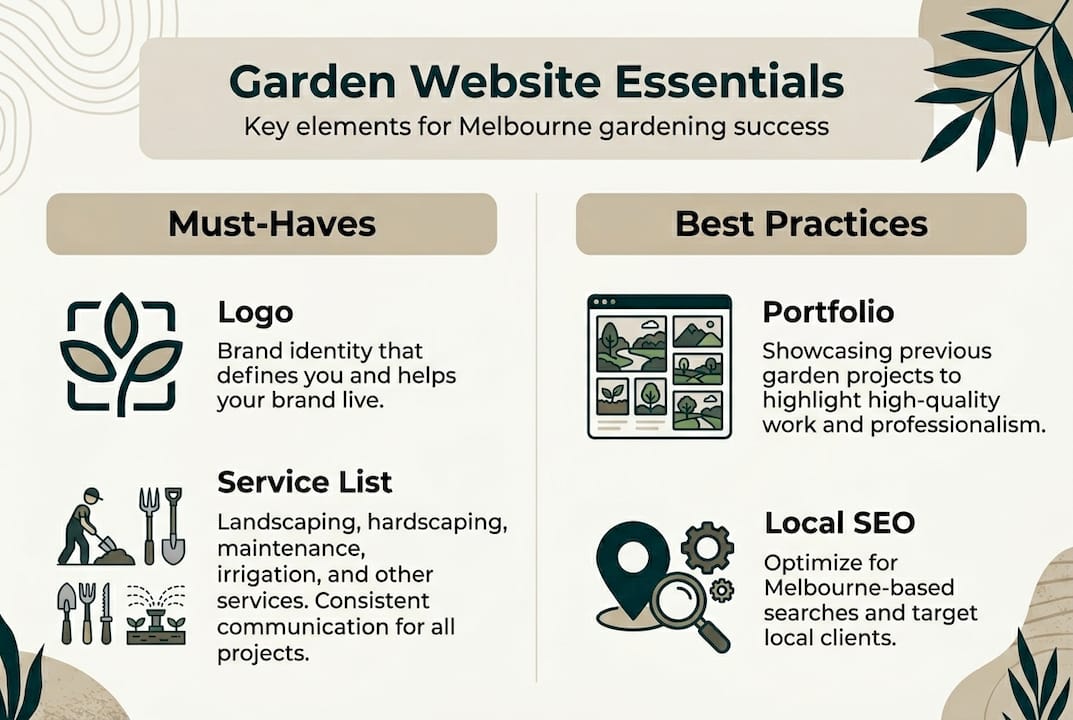
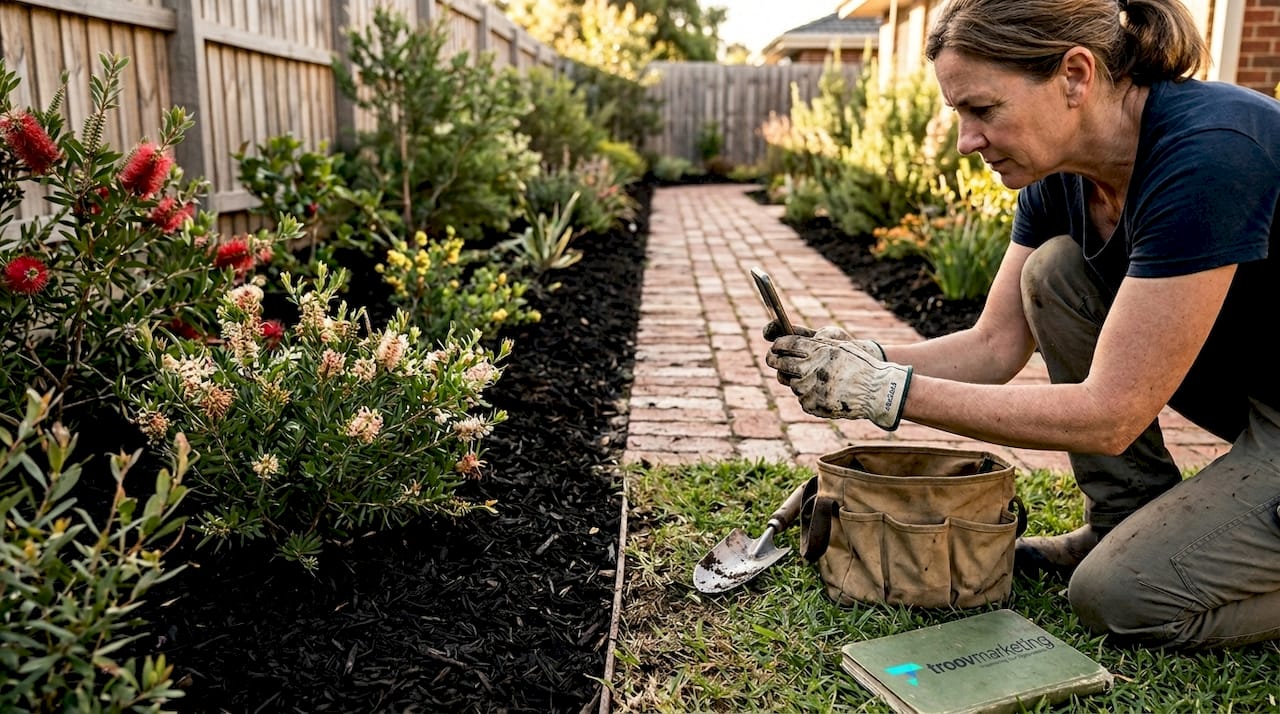
Pro tip: Prepare high quality images of your garden work to showcase expertise. Take photos in good natural light, include multiple angles of each project, and capture details that demonstrate craftsmanship. These images become your most persuasive sales tool.
| Required material | Purpose | Where to source |
|---|---|---|
| Business logo | Brand identity across site | Graphic designer or DIY tools |
| Service descriptions | Explain what you offer | Write yourself or hire copywriter |
| Project photos | Showcase completed work | Your phone or professional photographer |
| Customer testimonials | Build trust and credibility | Email past clients for reviews |
| Contact details | Enable enquiries | Your business records |
| Service area map | Show coverage zones | Google Maps screenshot |
Organise these materials in a dedicated folder before starting building your gardening website. Having everything ready streamlines the build process and prevents frustrating stops to hunt for missing content.
Step by step guide to building your garden business website
Choose a website platform that balances ease of use with professional results. Popular options include WordPress, Squarespace, and Wix. Each offers mobile responsive themes essential for reaching clients who search on phones. Pick a theme designed for service businesses, not generic templates that require extensive customisation.
Create clear navigation that guides visitors to action. Your menu should include Home, Services, Portfolio, About, and Contact in that order. Place your phone number prominently in the header so mobile users can call immediately. Add a bright, contrasting button labeled "Get a free quote" or "Book consultation" that appears on every page.
Optimise content for local search terms Melbourne residents actually use. Write naturally about "garden maintenance in Northcote" or "landscape design Kew" rather than generic "gardening services". Include your service suburbs in page titles, headings, and body text. This local focus helps Google connect your site with nearby searchers.
Add testimonials and portfolio images strategically throughout your site. Place a rotating testimonial banner on your homepage. Create individual portfolio pages for different project types like native gardens, vegetable patches, or courtyard makeovers. Include client quotes that mention specific benefits like "increased property value" or "low maintenance design".
Combining website design and local SEO significantly improves small business online visibility. Your site structure, content, and technical setup all work together to rank higher in Melbourne garden service searches.
Pro tip: Consistently use a branded colour scheme reflecting your business. Choose two or three colours from your logo and apply them to buttons, headings, and accents throughout the site. This visual consistency looks professional and makes your brand memorable.
| Approach | DIY website builders | Professional design services |
|---|---|---|
| Cost | $200 to $800 annually | $2,000 to $8,000 upfront |
| Time investment | 20 to 40 hours learning and building | 5 to 10 hours providing content and feedback |
| Design quality | Template based, limited customisation | Custom designed for your brand |
| SEO optimisation | Basic tools, requires your research | Expert implementation from start |
| Ongoing support | Self managed or paid support plans | Included maintenance and updates |
| Best for | Budget conscious, tech comfortable owners | Busy owners wanting professional results |
Follow gardeners website design tips and small business SEO best practices to maximise your site's effectiveness from launch day.
Avoiding common website mistakes and optimising for conversions
Cluttered design overwhelms visitors and kills conversions. Resist the urge to cram every service, photo, and testimonial onto your homepage. Use white space generously. Limit each page to one primary message and action. Guide visitors through a clear path from landing to enquiry rather than presenting a confusing maze of options.
Slow page loading frustrates visitors who bounce to competitors within seconds. Compress images before uploading them. Avoid autoplay videos that bog down mobile connections. Test your site speed using Google PageSpeed Insights and fix issues it identifies. Every second of delay costs you potential clients.
Mobile optimisation isn't optional when most local searches happen on phones. Test every page on your actual smartphone, not just desktop preview mode. Ensure buttons are large enough to tap easily. Check that text remains readable without zooming. Verify contact forms work smoothly on small screens.
Weak calls to action leave visitors uncertain about next steps. Replace vague "Learn more" buttons with specific prompts like "Request your garden assessment" or "See our portfolio". Place CTAs above the fold on key pages. Use action oriented language that tells visitors exactly what happens when they click.
Customer reviews and social proof dramatically increase trustworthiness. Display Google reviews prominently on your homepage. Include client names and suburbs with testimonials to boost authenticity. Add logos of professional associations or certifications you hold. These trust signals reassure hesitant visitors that you're legitimate and capable.
Regular website updates play a key role in maintaining SEO performance. Search engines favour sites that add fresh content, fix broken links, and keep information current. Set a quarterly schedule to review and refresh your site.
Common mistakes and how to fix them:
- Publishing without proofreading: Spelling and grammar errors destroy professional credibility. Use Grammarly or hire an editor before launching.
- Missing contact information: Visitors shouldn't hunt for how to reach you. Put your phone number, email, and service areas on every page.
- No clear service area definition: State exactly which Melbourne suburbs you cover. This prevents wasted enquiries from areas you don't service.
- Ignoring page titles and meta descriptions: These appear in search results and influence click through rates. Write unique, compelling descriptions for each page.
- Forgetting alt text for images: Describe each photo for accessibility and SEO. Use natural language like "native garden design in Hawthorn" not keyword stuffing.
Understand website update importance and create effective call to actions that convert browsers into bookers. Small improvements to these elements compound into significantly better results over time.
Measuring your website's success and next steps for growth
Google Analytics reveals exactly how visitors interact with your site. Install it immediately after launch to start collecting data. Track visitor numbers, which pages they view, how long they stay, and where they exit. This information shows what's working and what needs improvement.
Monitor your conversion rate, the percentage of visitors who submit enquiries or call you. Calculate it by dividing monthly enquiries by total visitors. A garden business website typically converts between 2% and 5% of visitors. Below 2% signals problems with your messaging, design, or targeting.
Google Business Profile insights measure local engagement beyond your website. Check how many people find your profile through searches versus maps. Track phone calls, direction requests, and website clicks originating from your profile. These metrics prove whether your local SEO efforts are reaching nearby customers.
Set monthly goals and review progress consistently. Aim for specific targets like 500 monthly visitors, 15 enquiry form submissions, or 10 phone calls from the website. Compare actual results to goals and adjust your content or SEO tactics accordingly. Consistent measurement prevents guessing and enables data driven decisions.
Key performance indicators every garden business should monitor:
- Organic search traffic: Visitors finding you through Google searches, showing SEO effectiveness.
- Bounce rate: Percentage leaving after viewing one page. Above 70% suggests content or design problems.
- Average session duration: How long visitors spend on your site. Longer indicates engaging, valuable content.
- Mobile versus desktop traffic: Reveals which experience to prioritise for improvements.
- Top landing pages: Shows which content attracts the most visitors and deserves expansion.
- Conversion rate by source: Identifies whether organic search, social media, or referrals deliver better quality leads.
The Australian landscaping sector is a $7.7 billion market in 2026, signalling strong growth potential. Regular performance tracking ensures your website captures an increasing share as the market expands.
Plan regular content updates to stay competitive and relevant. Add new portfolio projects quarterly to showcase recent work. Write blog posts answering common customer questions about seasonal gardening, plant selection, or maintenance tips. Update service descriptions to reflect new offerings or changed pricing. Fresh content signals to search engines that your site deserves continued ranking.
Next steps include exploring advanced SEO tactics like building local citations, earning backlinks from Melbourne gardening blogs, or creating video content for YouTube. Consider local advertising through Google Ads targeting high intent searches like "emergency tree removal Melbourne" or "garden design consultation". Access website management tools that streamline ongoing updates and performance monitoring.
Get expert help building your garden business website
Building an effective garden business website requires balancing design, content, technical SEO, and conversion optimisation. Professional help ensures your site launches polished, ranks well in Melbourne searches, and converts visitors into clients from day one.
Troov Marketing specialises in creating websites for Melbourne garden businesses that need more than generic templates. We handle the entire process from strategy and design through to launch and ongoing optimisation. Your site gets structured for local SEO, mobile performance, and clear conversion paths that turn browsers into bookings.
Access design expertise that understands what Melbourne garden clients respond to. We create clean, professional layouts showcasing your best work without overwhelming visitors. Our SEO strategies target the specific suburbs and services that matter to your business. Ongoing website management keeps content fresh and performance strong as your business grows.
Explore small business web design approaches that prioritise mobile users and local visibility. Use our ultimate website checklist to verify your site includes every essential element before launch. Learn how to effectively implement website design and local SEO strategies that work together for maximum impact.
FAQ
What is the most important feature for a garden business website?
Clear local contact information and easy booking options matter most. Melbourne clients need to see your phone number immediately and understand which suburbs you service. A simple contact form or online booking system removes friction from the enquiry process.
How much does a garden business website cost to build?
Costs range from $200 annually for basic DIY platforms to $2,000 through $8,000 for professional custom design. DIY saves money but requires significant time investment and technical learning. Professional builds deliver faster results with expert SEO and conversion optimisation included.
How often should I update my garden business website?
Update your site at least quarterly to maintain SEO rankings and showcase recent work. Add new portfolio projects, refresh testimonials, and update seasonal service information. Regular updates signal to search engines that your site remains active and relevant.
Can I handle SEO myself or should I hire an expert?
Basic SEO like writing location specific content and optimising page titles is manageable yourself with research. Expert help delivers faster, better local results through technical optimisation, link building, and Google Business Profile management. Most garden businesses benefit from professional SEO after establishing their initial site.
Do I need photos of my work on the website?
Yes, high quality project images build trust and showcase your skills more effectively than any written description. Include before and after shots, detail photos demonstrating craftsmanship, and variety showing different garden styles. Professional photography often pays for itself through increased conversion rates.