

Regular website updates aren't just good practice—they're essential for competitive SEO performance. Pages refreshed with meaningful content are twice as likely to reach Top 10 Google rankings within 30 days compared to static pages. For Melbourne small businesses, this means the difference between being found by local customers or getting buried in search results. Many business owners launch their site and assume the work is done, but search engines reward sites that demonstrate ongoing relevance and value.
Table of Contents
- How Regular Updates Improve Your Website's SEO
- Beyond SEO: How Updates Enhance Security And User Experience
- Best Practices For Updating Your Website Content Effectively
- Common Pitfalls To Avoid When Updating Your Website
- Boost Your Melbourne Business With Expert Website Updates
Key takeaways
| Point | Details |
|---|---|
| Ranking improvement | Regular updates double your chances of reaching Top 10 search results within 30 days |
| Traffic growth | Substantial content additions drive over 40% traffic increases on average |
| Security benefit | Regularly updated websites are 70% less likely to experience security breaches |
| Quality matters | Search engines reward meaningful content refreshes, not cosmetic date changes |
| Content strategy | Quarterly reviews of high traffic pages plus annual evergreen updates maximise results |
How regular updates improve your website's SEO
Search engines prioritise websites that demonstrate current relevance and authority. When you update content meaningfully, Google interprets this as a signal that your site actively serves user needs. Updated pages saw 43% higher AI Overview visibility and similar traffic increases, making regular refreshes a proven growth strategy.
The key distinction lies between substantive updates and superficial changes. Adding 500+ words of new insights, updating statistics with current data, or expanding sections with practical examples all qualify as meaningful improvements. Simply changing publication dates or tweaking a sentence delivers no SEO benefit and may actually harm credibility if Google detects manipulation.
Consider the compound effect of regular updates. A Melbourne plumbing business updating their emergency services page quarterly with seasonal advice, new case studies, and current pricing maintains relevance for both search algorithms and potential customers. This ongoing attention helps boost local SEO by 50% when combined with proper optimisation techniques.
Impact of regular updates on search rankings:
| Update frequency | Top 10 ranking probability | Average traffic increase |
|---|---|---|
| Weekly substantial updates | 2x higher | 43% |
| Monthly content refreshes | 1.7x higher | 34% |
| Quarterly reviews | 1.5x higher | 28% |
| Annual updates only | Baseline | Baseline |
| No regular updates | 0.5x lower | Declining |
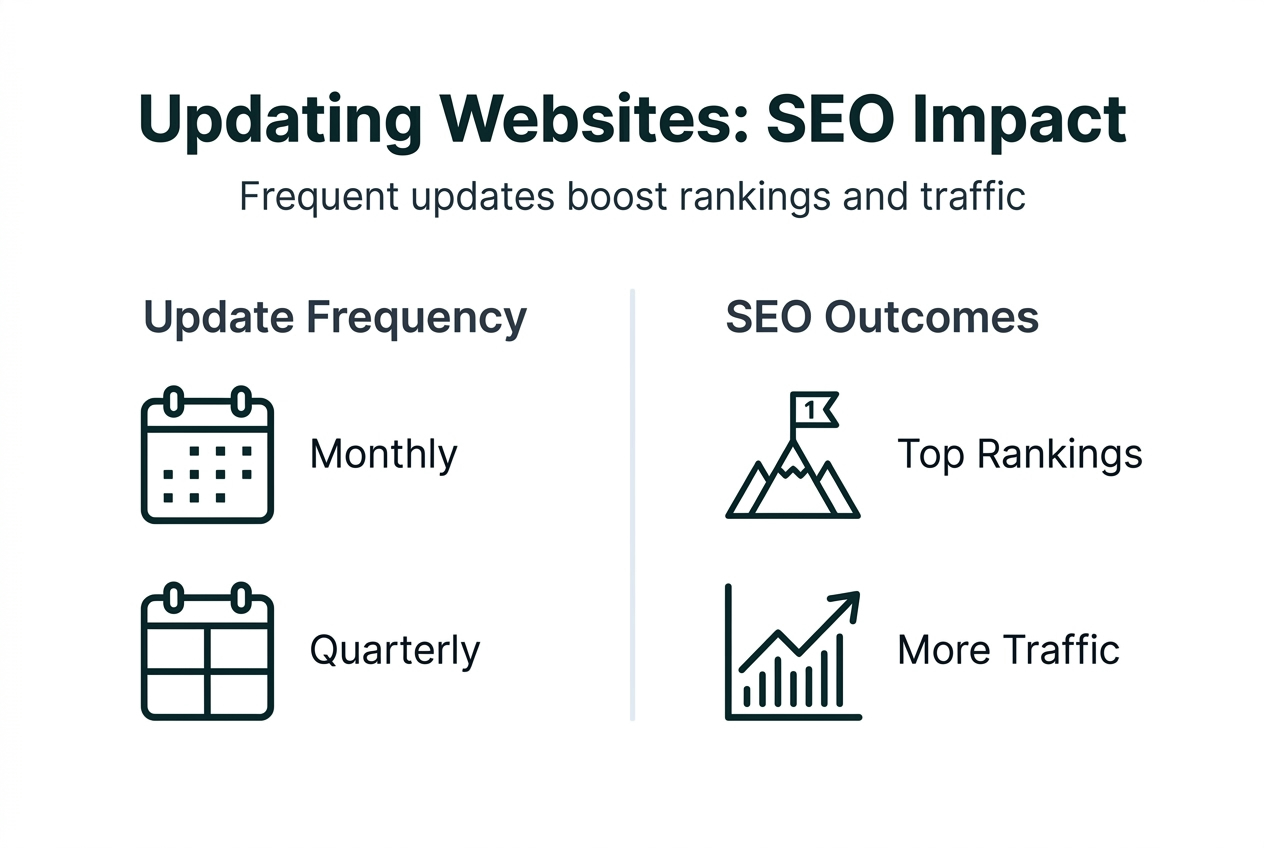
The data reveals a clear pattern. Consistency matters, but so does substance. A quarterly schedule targeting your highest performing pages often delivers the best return on effort for small businesses without dedicated content teams.
Pro Tip: Schedule quarterly content reviews targeting your top five traffic pages. Add fresh statistics, new examples, and updated insights to keep them competitive. Set calendar reminders to make this routine rather than reactive.
Beyond SEO: how updates enhance security and user experience
Website security represents a critical but often overlooked dimension of regular updates. Websites updated regularly are 70% less likely to be hacked compared to neglected sites. This statistic reflects how software vulnerabilities accumulate over time, creating entry points for automated attacks that scan the web for outdated systems.
Your website runs on multiple software layers including the content management system, plugins, themes, and server software. Each receives security patches addressing newly discovered vulnerabilities. Delaying these updates leaves known security holes open, essentially leaving your digital front door unlocked.

Beyond security, technical updates directly impact user experience and search rankings through Core Web Vitals. Google measures page loading speed, interactivity, and visual stability as ranking factors. Regular updates to your website management tools and optimisation maintain these performance metrics.
Security and performance benefits of regular updates:
- Patched software vulnerabilities preventing automated attacks and data breaches
- Malware scanning and removal protecting both your business and customer data
- Automated backup routines ensuring quick recovery if problems occur
- Performance optimisation maintaining fast loading speeds as content grows
- Compatibility updates preventing display issues across devices and browsers
- Security certificate renewals maintaining the padlock icon customers trust
Melbourne customers increasingly abandon slow or suspicious looking websites. A security warning or prolonged loading time costs you enquiries before potential customers even see your services. Regular maintenance prevents these silent revenue losses.
Pro Tip: Don't ignore technical updates because they seem complicated. Use automated website management tools to schedule performance checks and security patches. Most platforms offer one click updates that take minutes but protect thousands of dollars in potential damage.
Best practices for updating your website content effectively
Strategic content updates require planning rather than random changes. Following a systematic approach ensures your effort produces measurable results. Here's a proven process for effective website content updates:
- Audit existing content using analytics to identify your highest traffic pages and underperforming content
- Prioritise pages based on traffic potential, business value, and current ranking positions
- Research current keywords and search intent to align updates with what customers actually search
- Add meaningful information including new statistics, expanded explanations, or practical examples
- Update meta titles and descriptions to improve click through rates from search results
- Review internal links to ensure updated content connects logically with related pages
- Monitor results tracking ranking changes, traffic growth, and user engagement metrics
The difference between minor edits and substantive content changes determines your results. Quarterly YMYL reviews, annual evergreen refreshes, and data driven updates increase traffic by 34% on average. This structured approach outperforms random posting of new content without maintaining existing assets.
Minor edits vs substantive content changes:
| Aspect | Minor edits | Substantive changes |
|---|---|---|
| Word count added | Under 100 words | 500+ words |
| SEO impact | Minimal to none | Significant improvement |
| Time required | 15-30 minutes | 2-4 hours |
| Traffic increase | 0-5% | 25-45% |
| Ranking improvement | Rare | Common |
| AI visibility | No change | 43% increase |
Many small business owners fall into the trap of constantly adding new pages while neglecting existing content. Your current pages already have authority, backlinks, and ranking history. Refreshing them often delivers faster results than starting from scratch. Follow the ultimate website checklist to ensure updates address all critical elements.
Meta titles and descriptions deserve special attention during updates. Even without changing page content, refreshing these elements to match current search intent and include compelling calls to action can boost click through rates by 20% or more. Review your SEO for small businesses strategy to align metadata with business goals.
Common pitfalls to avoid when updating your website
Understanding what not to do prevents wasted effort and potential penalties. Several common mistakes undermine update effectiveness or actively harm your SEO performance.
The most prevalent error involves changing publication dates without adding meaningful content. Google now distinguishes genuine updates from manipulative tactics like cosmetic date changes. This practice may temporarily deceive users but provides no ranking benefit and risks being classified as spam.
Neglecting older pages represents another missed opportunity. Your established content often ranks for valuable keywords and attracts consistent traffic. Letting these pages become outdated gradually erodes their performance. Regular refreshes maintain and grow this organic traffic rather than watching it slowly decline.
Keyword stuffing and low value content additions harm more than help. Adding paragraphs of fluff to hit a word count target or cramming keywords unnaturally into text triggers quality filters. Focus on genuinely useful information that answers questions your customers actually ask.
"Search engines reward websites that demonstrate genuine expertise and regularly updated knowledge. Cosmetic changes designed to game algorithms are increasingly detected and ignored, making authentic content refreshes the only sustainable strategy for long term SEO success."
Key mistakes that waste effort and harm SEO:
- Changing publication dates without adding substantial new content or insights
- Ignoring older high traffic pages while only creating new content
- Overloading pages with keywords or repetitive phrases that harm readability
- Making only cosmetic changes like minor wording tweaks or formatting adjustments
- Updating content without researching current search intent and user needs
- Neglecting mobile optimisation when refreshing page layouts or adding media
- Failing to update outdated statistics, broken links, or deprecated information
Avoid these pitfalls by following the SEO guide for beginners and focusing on user value above algorithmic manipulation. Authentic improvements always outperform shortcuts in sustainable search performance.
Boost your Melbourne business with expert website updates
Maintaining an effective website update schedule requires time, expertise, and consistent attention. Many Melbourne small business owners struggle to balance content management with running their core operations. Professional website services ensure your site receives regular attention without diverting focus from customers and revenue generation.
Troov Marketing specialises in small business web design services that prioritise ongoing performance and local visibility. Our approach combines technical excellence with strategic content updates, keeping your site fresh, secure, and competitive. We understand Melbourne's local market and build websites structured for sustainable growth.
Whether you need help implementing the strategies from this guide or want comprehensive management, our team delivers reliable website solutions. Check our ultimate website checklist to assess your current site, or explore our SEO for small businesses in Melbourne services to build a stronger online presence that converts visitors into enquiries.
FAQ
How often should I update my business website?
Aim for quarterly content reviews and updates for your key traffic pages, with evergreen content refreshed annually to maintain rankings and relevance. Focus updates on meaningful improvements like adding new statistics, expanding explanations, or including fresh examples rather than cosmetic changes. This balanced approach delivers results without overwhelming small business schedules.
Do small businesses really benefit from updating their website regularly?
Yes, regular updates improve SEO rankings, increase web traffic by up to 43%, and reduce security risks by 70%, which are crucial for small business growth and local visibility. Studies show updated pages are twice as likely to rank in Google's Top 10 results within 30 days. These benefits compound over time, making consistent updates a high return investment.
What types of updates have the biggest impact on SEO?
Substantial content additions of 500+ new words, updating meta titles and descriptions to match current search intent, and fixing technical issues have the strongest positive effect on rankings and traffic. Minor cosmetic changes like tweaking a sentence or changing fonts alone do not improve rankings and may be ignored by search engines. Focus effort on meaningful improvements that genuinely help users.
How can I measure the success of my website updates?
Monitor Google rankings for target keywords, organic traffic growth, and user behaviour metrics such as time on page, engagement rates, and bounce rates. Use tools like Google Analytics and Search Console to track improvements after updates, comparing 30 day and 90 day periods. Website update performance metrics help quantify the return on your content investment and guide future priorities.