
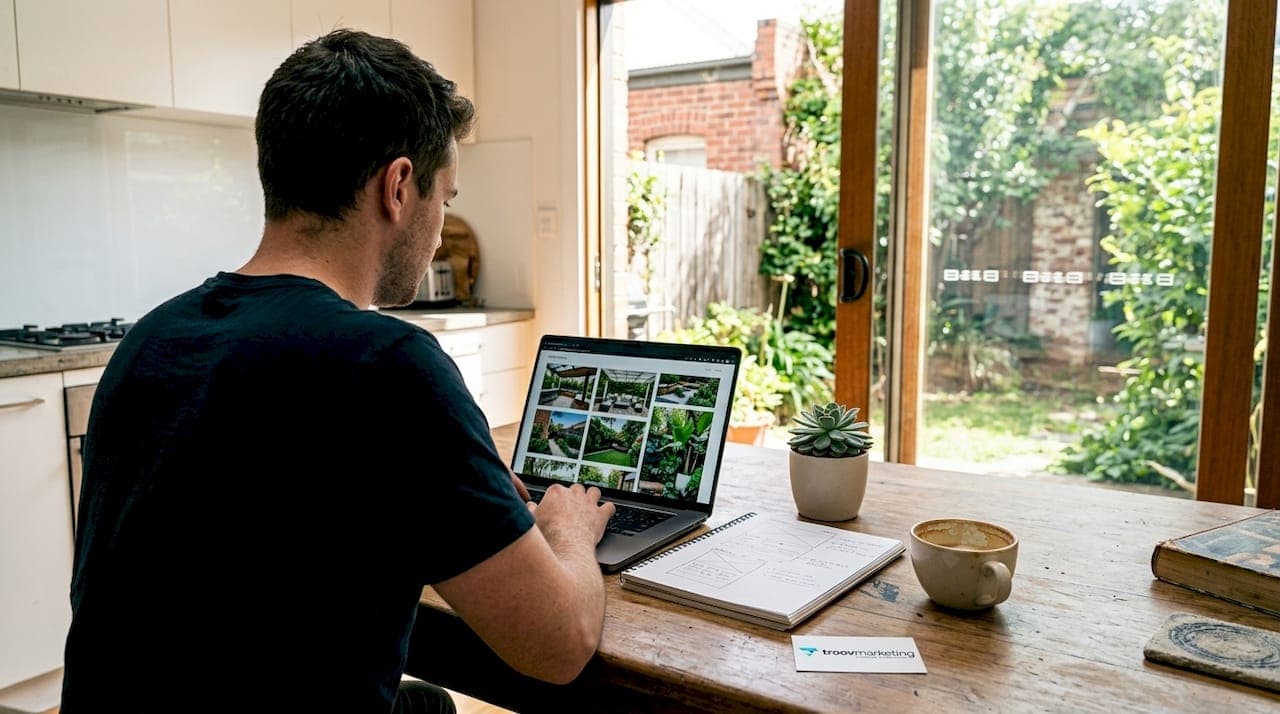
Running a landscaping or gardening business in Melbourne means you're competing in one of Australia's most active local service markets. Clients are searching online every day for someone who understands their garden, their climate, and their style. Yet many garden businesses are losing those clients to competitors with better websites, not better work. Choosing the right type of website is one of the most practical decisions you can make for your business. This guide walks you through the main options, from portfolio sites to booking engines, so you can pick the one that fits your goals and starts bringing in real enquiries.
Table of Contents
- How to choose the right garden website type
- Portfolio websites: show off your garden projects
- Lead generation websites: grow your enquiry list
- Service and booking sites: automate appointments for your garden business
- Comparison table: which garden website type suits your business?
- Our perspective: the website type debate misses the real point
- Ready to build a website that works for your garden business?
- Frequently asked questions
Key Takeaways
| Point | Details |
|---|---|
| Match type to goals | Choose a website type—portfolio, lead gen, or booking—based on your business needs and growth plans. |
| Local focus matters | Cater to Melbourne’s climate and client preferences with native, sustainable, and community-focused content. |
| Combine for impact | The best Melbourne garden websites often blend portfolios and lead generation or booking for maximum effect. |
| Prioritise usability | Make it easy for clients to see your work, enquire, or book directly from your website. |
How to choose the right garden website type
Before you build or upgrade your website, it pays to get clear on what you actually need it to do. A website that looks great but doesn't match your business model will cost you time and money without delivering results.
Start by asking yourself a few key questions:
- What is your primary goal? Do you want to showcase past projects, capture new leads, or let clients book appointments directly?
- Who are your ideal Melbourne clients? Residential homeowners, property developers, or strata managers all have different expectations.
- What is your budget and technical comfort level? Some website types require more ongoing management than others.
- How quickly can you respond to enquiries? This matters more than most people realise.
Melbourne clients are increasingly looking for garden businesses that understand local conditions. They want to see water-wise, low-maintenance features that suit the local climate, especially with growing interest in native plants and sustainable landscaping. If your business already works with these elements, your website should make that visible from the first page.
You should also think about how the website fits into your broader marketing. Check out our website design tips for gardeners for a practical starting point, and if you're still on the fence about whether a website is worth it, our post on why gardeners need a website lays it out clearly.
Pro Tip: In a competitive local market like Melbourne, the most effective garden websites blend portfolio visuals with a clear lead generation structure. You don't have to choose one or the other from day one.
Portfolio websites: show off your garden projects
With the decision criteria in mind, let's look at the first major type you'll encounter.
A portfolio website is built around visuals. It's your digital gallery, the place where before-and-after photos, project highlights, and design transformations do the talking. For landscapers and garden designers, this type of site can be incredibly powerful because the work itself is the proof.
Melbourne clients want to see project galleries and local testimonials before they pick up the phone. Seeing a completed garden that looks similar to their own property, in a similar suburb, with a similar style, builds immediate trust. That trust is hard to manufacture through words alone.
"Melbourne clients want to see gardens like theirs, designed for their unique climate."
This is why pairing your portfolio with honest local reviews is so important. A stunning gallery with no reviews leaves potential clients wondering. Add suburb-specific project names and client feedback, and your credibility goes up significantly.
Portfolio websites work best when you attract Melbourne clients online through strong imagery and a clear sense of your style and speciality.
Pros of a portfolio website:
- Strong visual impact that showcases your craftsmanship
- Builds credibility and trust before a client even contacts you
- Easy to update with new project photos
- Ideal for design-led businesses with a distinct style
Cons of a portfolio website:
- Less focused on direct lead generation
- Not suited to complex bookings or service menus
- Requires regular photo updates to stay fresh
- Can feel passive if there's no clear call to action
If your business wins work largely through word of mouth and referrals, a portfolio site gives those referrals a place to land and confirm their decision.
Lead generation websites: grow your enquiry list
For businesses more focused on inbound calls and bookings than visual storytelling, another option stands out.
A lead generation website is built with one goal in mind: turning visitors into enquiries. Every element, from the layout to the copy to the buttons, is designed to encourage someone to get in touch. This type of site works especially well for garden businesses that are actively trying to grow their client base.
Simple web forms with clear calls to action can increase local enquiries by up to 80%. That's a significant lift, and it comes from getting the basics right: a visible phone number, a short contact form, and a clear reason for the visitor to act now.
Strong trust signals matter here too. Think licences, insurance details, years of experience, and suburb coverage. Melbourne clients want to know you're local, reliable, and easy to reach.
Pro Tip: Adding suburb-specific keywords to your service pages, for example "garden maintenance in Hawthorn" or "landscaping in Brunswick," can double the number of qualified leads you receive from local search.
Explore our guide to must-have website features and our breakdown of service pages that convert to see how this works in practice.
Pros of a lead generation website:
- Fast client growth when paired with local SEO
- Measurable results through form submissions and call tracking
- Easier to run targeted marketing campaigns
- Works well for businesses with a broad service area
Cons of a lead generation website:
- Less emphasis on visual storytelling
- Content needs regular refreshing to stay relevant
- Requires a fast follow-up process to convert leads effectively
Service and booking sites: automate appointments for your garden business
If your focus is streamlining client appointments, an automated service site could be the answer.
A service and booking website takes things a step further. Instead of just capturing an enquiry, it lets clients choose a service, pick a time, and pay upfront, all without you needing to be involved. For lawn care businesses, garden consultants, or landscapers offering fixed-price site visits, this kind of automation is a genuine time-saver.

Offering online booking tools is a proven way to increase conversion rates for local gardening services. When a client can book at 9pm on a Sunday without waiting for a callback, you're removing a major barrier.
Pro Tip: Let clients book and pay directly through your website. This reduces admin time, cuts down on no-shows, and gives clients a professional experience from the very first interaction.
Here's what a typical client booking journey looks like on a well-built service site:
- Client lands on your homepage and sees your services clearly listed
- They click through to a specific service page with pricing and details
- They select a preferred date and time from your calendar
- They enter their contact and address details
- They pay a deposit or full amount online
- They receive an automated confirmation and reminder
For more on building this kind of site, our building a gardening website guide covers the full process.
Comparison table: which garden website type suits your business?
To help with your final decision, here's a clear visual comparison of all three types.
As the website type should match your business model, target clients, and growth goals, use this table as a guide rather than a strict rule.
| Feature | Portfolio | Lead generation | Booking site |
|---|---|---|---|
| Visual impact | ★★★★★ | ★★★ | ★★ |
| Lead potential | ★★ | ★★★★★ | ★★★★ |
| Client trust signals | ★★★★★ | ★★★★ | ★★★ |
| Automation | ★ | ★★ | ★★★★★ |
| Ease of management | ★★★★ | ★★★ | ★★ |
The takeaway is straightforward. A portfolio site builds credibility and showcases your craft. A lead generation site drives growth and fills your pipeline. A booking site saves time and reduces admin. None of these is inherently better than the others. The right choice depends on where your business is right now and where you want it to go.
For inspiration on sustainable and native garden design that you can feature on any of these site types, sustainable website inspiration is worth exploring.
As your business grows, you can combine features from all three types. Many Melbourne garden businesses start with a portfolio, add a contact form, and eventually introduce a booking system as demand increases.
Our perspective: the website type debate misses the real point
Here's something most web design articles won't tell you: the debate over which website type to choose is often a distraction from the more important question, which is whether your website is actually built for local search.
We've worked with Melbourne garden businesses that had beautiful portfolio sites and zero enquiries. We've also seen basic lead generation pages outperform polished competitors simply because they ranked for the right suburb keywords. The type of website matters far less than the foundations underneath it.
Local SEO, fast load times, mobile-friendly design, and a clear structure that Google can read, these are the things that determine whether anyone finds your website in the first place. A booking system is useless if no one lands on the page. A gallery is irrelevant if it doesn't show up in search results.
Our honest advice: don't spend months agonising over website type. Pick the option that best fits your current business model, build it on solid technical foundations, and optimise it for the suburbs you actually serve. Then evolve it as you grow. The businesses that win online aren't the ones with the fanciest sites. They're the ones that show up consistently in local search and make it easy for clients to take the next step.
Ready to build a website that works for your garden business?
At Troov Marketing, we build websites for Melbourne landscapers and garden businesses that are fast, easy to manage, and structured for local SEO from day one. Whether you need a portfolio to showcase your projects, a lead generation site to grow your enquiry list, or a booking system to streamline appointments, we can help you choose the right approach and build it properly. We work with small businesses across Melbourne and understand what local clients expect. If you're ready to turn your website into a genuine source of new work, get in touch with our team today.
Frequently asked questions
Which type of garden website gets the most leads?
Lead generation websites typically get the most enquiries for Melbourne garden businesses, especially when optimised for local search. Simple web forms can increase local enquiries by up to 80% when paired with clear calls to action.
How can I showcase sustainable gardening on my website?
Use a portfolio website to highlight native or water-wise projects and add content about your sustainable practices. Featuring water-wise, low-maintenance features helps you connect with Melbourne clients who are increasingly climate-aware.
Do I need a booking system on my garden website?
If you want to reduce admin and give clients instant booking options, a booking system is highly recommended. Offering online booking tools is a proven way to increase conversion rates for local gardening services.
Can I combine different website types?
Yes, many successful Melbourne garden businesses blend portfolio, lead gen, and booking features for best results. Website features can be combined as your business evolves to deliver greater impact at each stage of growth.