

Your website's hosting determines whether customers find a fast, secure site or abandon it before it loads. Website hosting is the foundation of online presence, impacting SEO, ad performance, and lead generation. Yet many Australian trades and service businesses treat hosting as an afterthought, choosing the cheapest option without understanding how it affects their bottom line. Poor hosting choices lead to slow load times, security breaches, and lost revenue. This guide breaks down website hosting essentials in plain language, helping you make informed decisions that protect your business and improve customer experience.
Table of Contents
- What Is Website Hosting And Why Does It Matter?
- How Australian Server Location Impacts Your Website Speed And Business Performance
- Hosting Security And Reliability: Protecting Your Business From Costly Breaches And Downtime
- Choosing The Right Hosting Plan: Balancing Features, Support, And Business Needs
- How Troov Marketing Can Support Your Small Business Website Success
Key takeaways
| Point | Details |
|---|---|
| Server location matters | Australian servers reduce latency and improve local visitor speed significantly |
| Security protects revenue | Strong hosting security prevents costly breaches and maintains customer trust |
| Uptime affects reliability | Higher uptime guarantees mean fewer minutes of lost business each month |
| Support saves money | Local 24/7 support resolves issues quickly, minimising downtime costs |
| Features impact growth | Backups, SSL, and scalability determine your site's long-term performance |
What is website hosting and why does it matter?
Website hosting means storing your website files on a server that stays connected to the internet 24/7. When someone types your web address, their browser retrieves these files from your hosting server and displays your site. Without hosting, your website simply doesn't exist online.
Four main hosting types serve different business needs:
- Shared hosting: Multiple websites share one server, keeping costs low but limiting resources and speed
- VPS hosting: Virtual private servers give you dedicated resources on a shared physical machine, balancing cost and performance
- Dedicated hosting: Your business gets an entire server, maximising speed and control but increasing costs substantially
- Cloud hosting: Your site runs across multiple connected servers, providing excellent reliability and scalability
Hosting quality directly affects three critical business outcomes. Speed determines whether visitors stay or leave, security protects your reputation and customer data, and uptime ensures your site remains accessible when customers search for your services. Website hosting impacts SEO by influencing page load times and site availability, both ranking factors Google considers.
Many business owners view hosting as purely technical infrastructure, disconnecting it from revenue and growth. This misconception costs money. Slow hosting drives away potential customers before they see your services. Poor security hosting exposes you to breaches that destroy trust and trigger legal obligations. Unreliable hosting means lost enquiries during downtime.
Pro Tip: Treat hosting as a business investment, not an IT expense. Calculate what one hour of downtime costs in lost enquiries, then evaluate hosting reliability accordingly.
The hosting you choose sets the foundation for everything else. A beautifully designed website on poor hosting still delivers terrible user experience. Effective SEO for small businesses requires fast, reliable hosting to achieve and maintain rankings. Understanding hosting basics empowers you to make decisions that support business growth rather than hinder it.
Choosing the right web hosting requires evaluating your specific business needs against available options. Consider your technical skills, growth plans, and budget constraints when comparing providers.
How Australian server location impacts your website speed and business performance
Server location creates measurable differences in website speed for Australian visitors. Websites hosted on Australian servers load 40–60% faster for local users compared to overseas hosting. This speed advantage comes from reduced latency, the time data takes to travel between server and visitor.
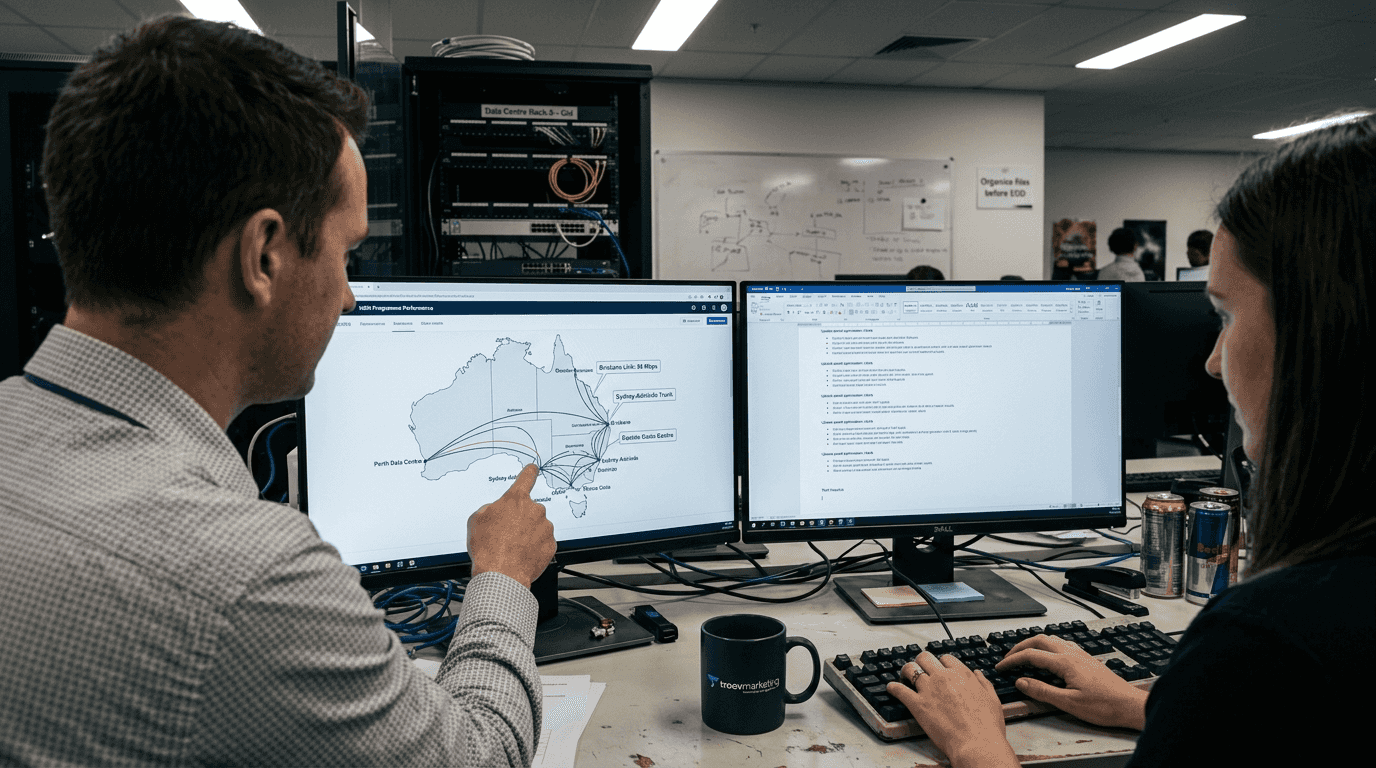
Physical distance matters because data travels at finite speeds through undersea cables and network infrastructure. A server in Sydney responds to a Melbourne visitor much faster than one in Los Angeles or London. Server location significantly impacts speed for Australian users, with local servers offering lower latency that improves user experience.
| Server Location | Typical Latency | Load Time Impact | Best For |
|---|---|---|---|
| Sydney/Melbourne | 5-20ms | Fastest for AU visitors | Local businesses targeting Australian customers |
| Singapore | 80-120ms | Moderate for AU visitors | Asia-Pacific regional businesses |
| US West Coast | 150-200ms | Slower for AU visitors | Global sites with US focus |
| Europe | 250-350ms | Slowest for AU visitors | European-focused businesses only |
Global hosting providers can match local speed through smart infrastructure. Edge caching stores copies of your site on servers worldwide, serving Australian visitors from nearby locations. Strong ISP peering agreements create direct connections between hosting networks and Australian internet providers. Providers with Sydney data centre presence combine global resources with local speed advantages.
Faster load times produce tangible business results:
- Improved user experience keeps visitors engaged rather than frustrated
- Better SEO rankings as Google rewards fast-loading sites
- Higher conversion rates because speed reduces abandonment
- Reduced bounce rates as pages load before visitors lose patience
Pro Tip: Test your current site speed using Google PageSpeed Insights with an Australian location setting to see how local visitors actually experience your site.
Server location alone doesn't guarantee performance. Evaluate these additional factors when comparing hosts:
- Uptime guarantees: 99.9% allows 44 minutes monthly downtime, while 99.99% permits only 4 minutes
- Backup policies: Daily automated backups protect against data loss from errors or attacks
- Renewal costs: Introductory rates often jump significantly after the first term
- Local support: Australian-based customer service resolves issues during your business hours
Choosing hosting with Australian server benefits makes particular sense for trades and service businesses targeting local customers. Your plumbing, electrical, or professional services primarily attract nearby clients who experience the full speed advantage of local hosting.
Your hosting choice affects every aspect of your online presence. Small business web design delivers better results on fast, reliable hosting. Common website mistakes often stem from inadequate hosting that undermines otherwise solid business sites.
Hosting security and reliability: protecting your business from costly breaches and downtime
Poor hosting security creates vulnerabilities that criminals actively exploit. Common weaknesses include unpatched server software, reused administrator passwords, and outdated plugins that hackers scan for automatically. These security gaps don't just risk data, they threaten your entire business.
The consequences of security breaches extend far beyond technical fixes. The Distribute.IT hack resulted in total business loss and severe personal and financial trauma for the co-owner. This Australian hosting provider's breach destroyed customer trust, triggered legal liability, and ultimately ended the business. Small businesses face similar risks without adequate hosting security.
"We lost everything. The business, our reputation, years of work. The personal toll was devastating. We never imagined a security breach could destroy us completely."
Security breaches damage businesses through multiple channels:
- Customer data theft triggers legal obligations and potential fines
- Site defacement destroys professional credibility instantly
- Malware infections spread to customer devices, creating liability
- Recovery costs include technical fixes, legal fees, and lost revenue
- Reputation damage persists long after technical restoration
Uptime guarantees reveal hosting reliability through specific numbers. Uptime differences have significant impact on actual downtime experienced. A 99.9% guarantee permits 44 minutes of downtime monthly, totalling over 8 hours yearly. A 99.99% guarantee allows only 4 minutes monthly, or about 52 minutes yearly. For businesses relying on online enquiries, these differences represent real revenue loss.
Calculate downtime cost by estimating hourly enquiry value. If your site generates two enquiries hourly worth $500 each, 44 minutes of monthly downtime costs roughly $733 in lost opportunities. Over a year, choosing 99.9% over 99.99% uptime potentially costs $8,796 in missed business.
Essential security features should come standard with quality hosting:
- Daily automated backups: Restore your site quickly after attacks or errors
- SSL certificates: Encrypt data transmission and boost search rankings
- Web application firewalls: Block malicious traffic before it reaches your site
- Malware scanning: Detect and remove threats automatically
- DDoS protection: Maintain availability during coordinated attacks
Pro Tip: Verify backup restoration works by testing a backup recovery quarterly. Many businesses discover backup failures only when they desperately need them.
Multi-tier hosting architectures improve both security and reliability for growing businesses. Staging environments let you test changes safely before deploying to your live site. Load balancing distributes traffic across multiple servers, maintaining performance during traffic spikes. Redundant systems ensure one component failure doesn't crash your entire site.
Proper website management tools complement secure hosting by maintaining plugins, monitoring performance, and detecting issues early. Security and reliability work together, each reinforcing the other to protect your business investment.
Choosing the right hosting plan: balancing features, support, and business needs
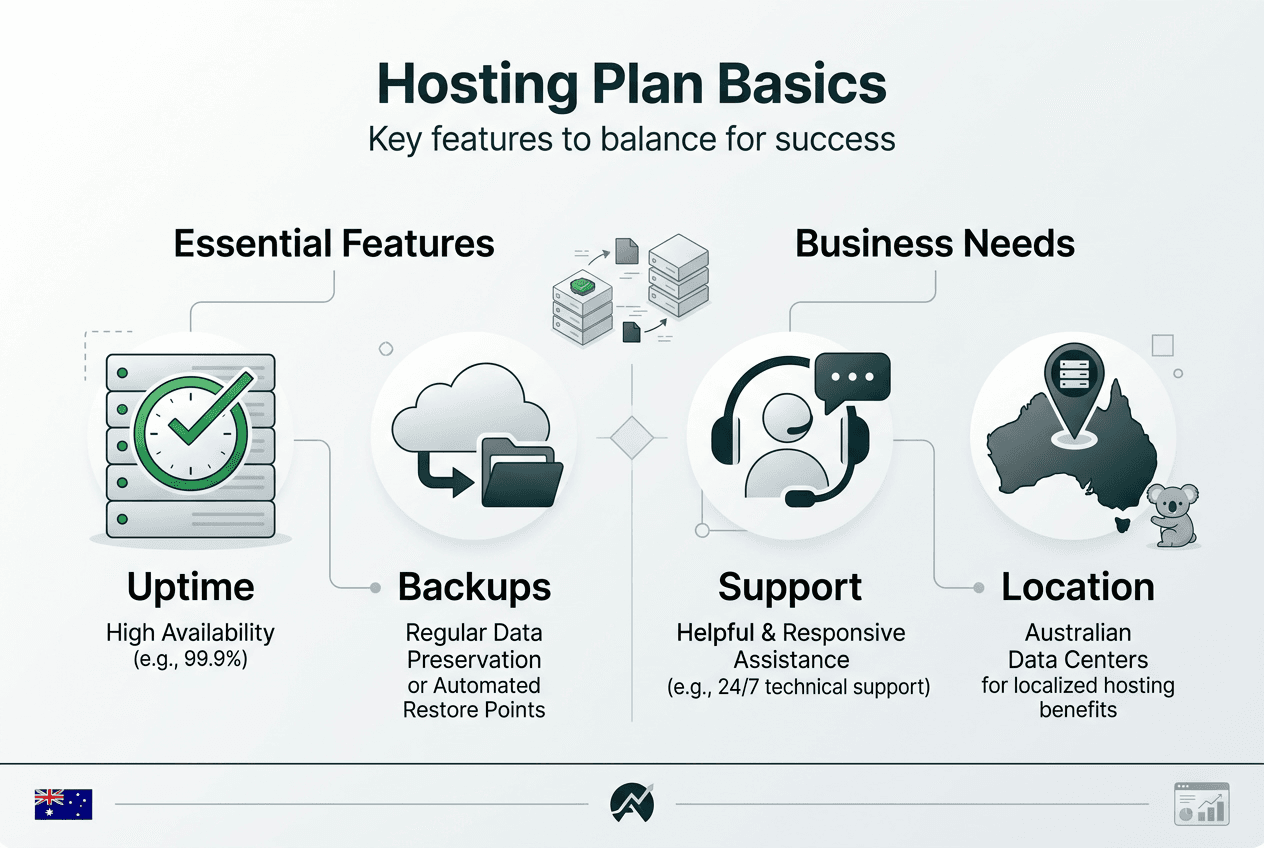
Selecting appropriate hosting requires matching plan features to your specific business requirements, technical capabilities, and growth trajectory. Different hosting types suit different situations.
| Hosting Type | Best For | Typical Cost | Key Advantages | Main Limitations |
|---|---|---|---|---|
| Shared | New sites, tight budgets | $5-15/month | Low cost, easy setup | Limited resources, slower speed |
| VPS | Growing businesses | $25-80/month | Dedicated resources, better performance | Requires some technical knowledge |
| Dedicated | High-traffic sites | $100-300/month | Maximum control and speed | Expensive, needs technical expertise |
| Cloud | Scalable businesses | $10-100+/month | Flexible scaling, excellent uptime | Variable costs, complexity |
Evaluating hosting plans requires looking beyond advertised features to understand real value:
- Assess backup frequency and retention: Daily backups kept for 30 days provide better protection than weekly backups kept for 7 days
- Verify SSL certificate inclusion: Free automated SSL saves ongoing costs and simplifies management
- Check firewall and security features: Web application firewalls and malware scanning should come standard
- Evaluate customer support availability: 24/7 support via phone, chat, and email ensures help when you need it
- Review uptime SLA guarantees: Look for 99.95% or higher with compensation for failures
- Calculate total cost over 3 years: Include renewal rates, not just introductory pricing
Local support availability significantly impacts how quickly you resolve costly issues. Australian-based support teams understand local business needs, work during your business hours, and communicate without language barriers. When your site goes down at 9am Melbourne time, local support responds immediately rather than waiting for overseas teams to start their day.
Price should not be the primary factor when choosing hosting. The cheapest option often lacks critical features, reliable support, or adequate resources. Calculate value by dividing total annual cost by uptime percentage, support quality, and included features. A $200 yearly plan with 99.99% uptime and excellent support delivers better value than a $50 plan with 99.5% uptime and poor support.
Renewal pricing deserves careful attention because introductory rates often increase 200-400% after the first term. A host advertising $5 monthly hosting might charge $20 monthly upon renewal. Request renewal pricing before committing, and factor these costs into your comparison. Billing currency also matters for Australian businesses, as USD pricing creates exchange rate uncertainty.
Your technical skill level should influence hosting choice significantly. Shared hosting suits businesses without technical staff because the host manages server maintenance, security updates, and technical issues. VPS and dedicated hosting require more technical knowledge for server configuration, security hardening, and troubleshooting. Cloud hosting offers flexibility but introduces complexity in resource management and cost optimisation.
Pro Tip: Start with managed hosting that handles technical maintenance, then migrate to unmanaged options only if you hire technical staff or develop in-house expertise.
For small businesses, balancing latency, support, and long-term value is key to choosing hosting that supports growth without creating technical headaches. Your hosting should simplify business operations, not complicate them.
Effective hosting supports broader business goals. Learning SEO for beginners becomes more effective when your site loads quickly and remains accessible. Proper website management builds on reliable hosting foundations.
How Troov Marketing can support your small business website success
Understanding website hosting fundamentals helps you make informed decisions, but implementing them effectively requires expertise and ongoing attention. Troov Marketing specialises in building fast, reliable websites for Australian trades and service businesses, handling the technical complexities so you can focus on running your business.
We design and build small business websites optimised for performance from day one, selecting appropriate hosting, configuring security features, and structuring sites to support local search visibility. Our approach focuses on strong foundations rather than quick fixes, ensuring your website grows with your business over time.
Our SEO services for small businesses help Melbourne trades and professional services improve their local visibility through search-friendly site structure, Google Business Profile optimisation, and ongoing support. We provide practical tools including our comprehensive website checklist to help you maintain performance and security between professional reviews.
What is website hosting?
What exactly is website hosting in simple terms?
Website hosting is a service that stores your website files on a server connected to the internet, making your site accessible to visitors 24/7. Think of it like renting space in a building, your website files live on the hosting company's server instead of your computer. When someone visits your site, their browser retrieves these files from the hosting server and displays your pages.
How does shared hosting differ from dedicated hosting?
Shared hosting means your website shares a server with dozens or hundreds of other sites, splitting resources and costs but limiting performance and control. Dedicated hosting gives your business an entire server, providing maximum speed, security, and customisation but costing significantly more. Shared hosting suits new or small sites, while dedicated hosting serves high-traffic businesses with specific technical requirements.
Why does server location affect website speed for Australian customers?
Server location impacts speed because data travels at finite speeds through physical cables and network infrastructure. Australian servers respond to local visitors 40-60% faster than overseas servers because the data travels shorter distances. This reduced latency improves user experience, search rankings, and conversion rates for businesses targeting Australian customers.
What security features should I look for in website hosting?
Essential hosting security features include daily automated backups for quick recovery, SSL certificates for encrypted data transmission, web application firewalls to block malicious traffic, and malware scanning to detect threats. Quality hosts also provide DDoS protection, regular security updates, and monitoring to identify issues before they cause damage. These features protect your business data, customer information, and professional reputation.
What practical difference do uptime guarantees make?
Uptime guarantees determine how many minutes your site can be offline monthly. A 99.9% guarantee permits 44 minutes of downtime each month, totalling over 8 hours yearly, while 99.99% allows only 4 minutes monthly or about 52 minutes yearly. For businesses relying on online enquiries, these differences represent real revenue loss during periods when potential customers cannot access your site.
How do I know when I need to upgrade or change my hosting?
Consider upgrading hosting when your site consistently loads slowly despite optimisation, experiences frequent downtime or errors, receives security warnings or breach attempts, or outgrows current resource limits causing performance issues. Other signs include poor support response times, unexpected cost increases at renewal, or business growth requiring better reliability and features than your current plan provides.