

Many small business owners believe website updates are purely cosmetic, tweaking colours or refreshing images to keep things looking modern. This misconception costs businesses dearly in search rankings and customer engagement. Regular website updates are fundamental to SEO performance, user experience, and security. For Melbourne businesses competing in local search, keeping your website fresh and current directly influences how often you appear in search results and whether visitors trust your business enough to make contact. This article explores why consistent updates matter and how to implement them effectively.
Table of Contents
- How Regular Updates Boost Your Search Engine Rankings
- Improving User Experience With Updated Content And Site Structure
- Securing Your Website Through Regular Updates
- Practical Strategies For Maintaining Regular Website Updates
- How Troov Marketing Can Help Your Melbourne Business
- Frequently Asked Questions
Key takeaways
| Point | Details |
|---|---|
| Search rankings improve | Websites updated frequently see 30% more organic traffic through better search visibility |
| User engagement increases | Updated content and structure reduce bounce rates and build customer trust |
| Security threats decrease | Regular patches and updates cut malware risk by 50%, protecting your reputation |
| Implementation is manageable | Content calendars and strategic planning make consistent updates achievable for small businesses |
How regular updates boost your search engine rankings
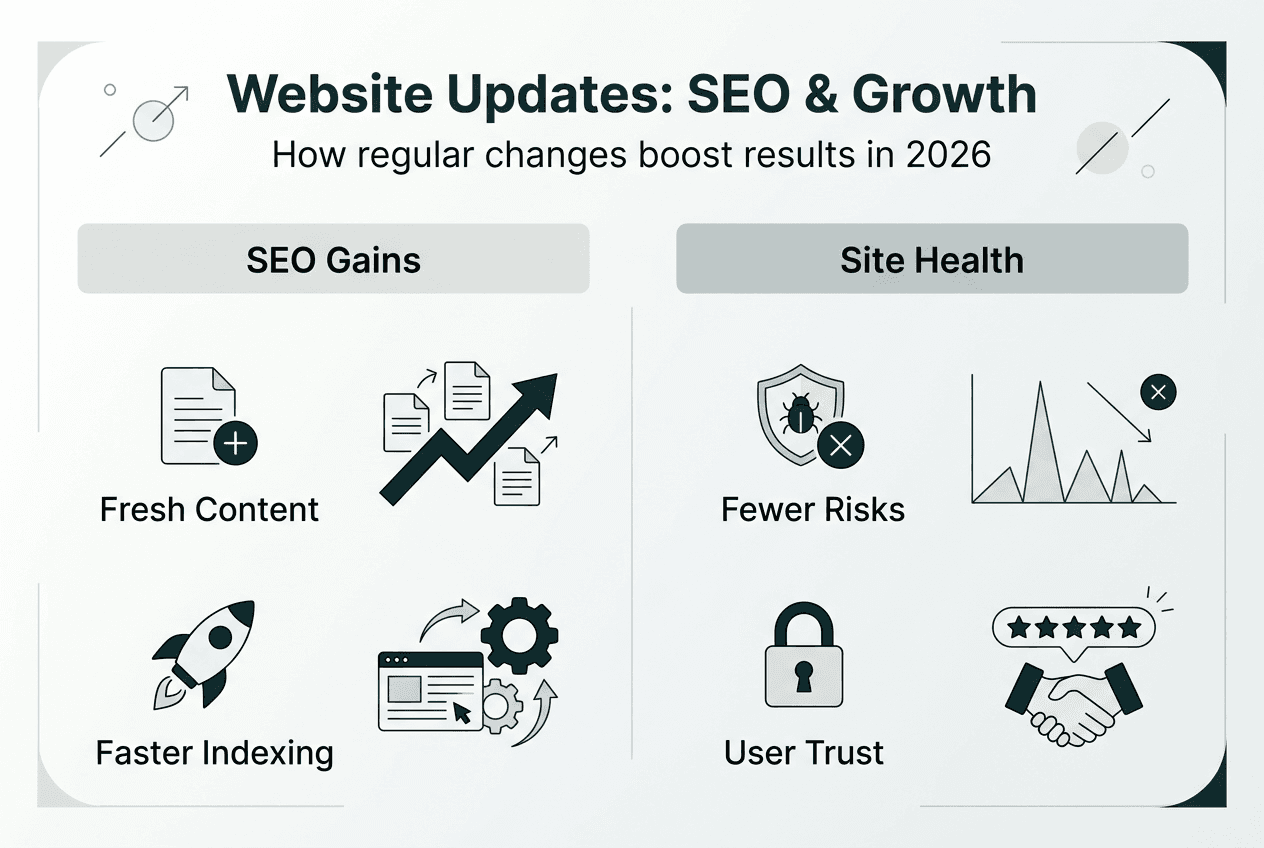
Google's algorithm favours websites that demonstrate ongoing activity and relevance. When you publish new content, refresh existing pages, or update site structure, search engines interpret these signals as proof your business is active and your information current. This freshness factor influences where you appear in search results, particularly for competitive local searches in Melbourne.
The impact is measurable. Websites updated frequently see 30% more organic traffic compared to stagnant sites. Search engines crawl active websites more often, indexing new content faster and giving you more opportunities to rank for relevant search terms. For small businesses targeting local customers, this increased visibility translates directly to more enquiries and sales opportunities.
Keyword optimisation requires ongoing attention. Search trends shift as customer language evolves and new competitors enter your market. Updating your content to reflect current search terms keeps you aligned with what Melbourne customers actually type into Google. You might have optimised for "cheap plumber" three years ago, but today's searches might focus on "emergency plumbing service" or "licensed plumber near me."
Consider these ranking benefits from regular updates:
- Fresh content signals relevance to search algorithms
- Updated pages receive more frequent crawling and indexing
- Current keywords match evolving customer search behaviour
- Active sites build authority and trust signals over time
The competitive advantage becomes clear when you examine local search results. Businesses publishing weekly blog posts, updating service pages monthly, and refreshing testimonials regularly consistently outrank competitors with static websites. Your small business SEO website updates create compound benefits, where each improvement builds on previous optimisation efforts.
Search engines also evaluate user behaviour metrics. When visitors spend more time on your updated pages, click through to multiple sections, and return for new content, these engagement signals reinforce your rankings. Stale content drives visitors away quickly, sending negative signals that push you down in search results.
Improving user experience with updated content and site structure
User experience directly influences both SEO performance and conversion rates. When you update content for clarity, improve navigation paths, or enhance page loading speed, you create a better experience that keeps visitors engaged. Melbourne customers researching local services make quick judgements about professionalism based on how current and polished your website appears.

Engagement metrics tell the story. Updated content improves engagement metrics by 20 to 30%, directly benefiting SEO through reduced bounce rates and longer session durations. Google interprets these signals as indicators of quality, rewarding sites that keep visitors engaged with better rankings. For small businesses, this creates a positive cycle where better content drives more traffic, which improves rankings, attracting even more potential customers.
Structural improvements matter as much as content updates. Reorganising your services menu, adding clear calls to action, or simplifying contact forms removes friction from the customer journey. When visitors find information quickly and complete desired actions easily, your website fulfils its core purpose of generating enquiries and sales.
Consider these user experience improvements:
- Updated content reflects current services, pricing, and business information
- Improved navigation helps visitors find relevant pages faster
- Faster loading speeds reduce frustration and abandonment
- Mobile optimisation serves the majority of local search traffic
- Fresh testimonials and case studies build immediate credibility
Trust building requires consistent attention. Outdated copyright dates, expired promotional offers, or broken links signal neglect. Melbourne customers researching local businesses notice these details and often move to competitors with more polished, current websites. Your business might deliver exceptional service, but an outdated website undermines that reputation before customers ever make contact.
Pro Tip: Audit your website quarterly from a customer perspective. Click every link, test forms on mobile devices, and read content as if researching your services for the first time. This simple exercise reveals opportunities to boost local SEO updates through improved user experience.
Session duration and bounce rates directly correlate with search rankings. When you update content to be more engaging, add relevant internal links, or improve readability, visitors naturally spend more time exploring your site. This extended engagement signals value to search engines while giving you more opportunities to convert visitors into customers.
Securing your website through regular updates
Cybersecurity threats evolve constantly, targeting vulnerabilities in outdated software, plugins, and content management systems. Small business websites are attractive targets because owners often lack dedicated IT resources to monitor and patch security gaps. A compromised website damages your reputation, exposes customer data, and can result in your site being blacklisted from search results entirely.
The statistics are sobering. Regularly updated websites are 50% less likely to suffer malware attacks compared to sites running outdated software. For Melbourne businesses handling customer enquiries, contact forms, or online bookings, this protection is essential. A security breach not only costs money to remediate but destroys the trust you've built with local customers.
WordPress powers many small business websites, and its plugin ecosystem requires vigilant maintenance. Each plugin represents potential vulnerability if not updated promptly. Hackers actively scan for sites running outdated versions of popular plugins, exploiting known security flaws to inject malware, steal data, or redirect visitors to malicious sites.
Consider these security benefits of regular updates:
- Patched vulnerabilities close doors to common attack vectors
- Updated SSL certificates maintain secure connections and trust signals
- Current software versions include latest security improvements
- Regular monitoring catches suspicious activity before major damage occurs
- Backup systems protect against data loss from attacks or failures
Your website management tools should include automated update notifications and security scanning. Many hosting providers offer these features, but you must act on alerts promptly. Delaying security updates by even a few days can leave your site vulnerable during that window.
"The majority of successful website attacks exploit known vulnerabilities in outdated software. Regular updates are your first line of defence against these threats, protecting both your business and your customers."
Google penalises compromised websites harshly. If your site is hacked and begins serving malware or spam, search engines will remove you from results and display security warnings to visitors. Recovering from this damage takes months, even after cleaning the infection. Prevention through regular updates is far easier than remediation after an attack.
Practical update frequency varies by component. Core CMS updates should be applied within days of release, particularly security patches. Plugin updates require testing but should happen weekly. Content updates and SEO improvements can follow a monthly schedule. This layered approach balances security needs with resource constraints typical of small businesses.
Practical strategies for maintaining regular website updates
Consistent website maintenance requires planning rather than perfection. Melbourne small businesses often struggle with updates because they lack a systematic approach, attempting changes sporadically when time permits. A structured strategy makes updates manageable and ensures nothing critical gets overlooked.
Content calendars transform random updates into strategic publishing schedules. Implementing a content calendar supports consistent updates, boosting SEO and engagement through regular fresh content. Plan blog posts, service page refreshes, and seasonal promotions months in advance. This forward planning removes the stress of deciding what to update while ensuring your website stays current.
Automation versus manual updates presents different trade offs. Automated security updates provide essential protection without requiring your attention, but should be configured carefully to avoid compatibility issues. Content updates benefit from human oversight to maintain quality and relevance. Finding the right balance depends on your technical comfort and available time.
Follow these actionable steps for consistent updates:
- Analyse current website performance using Google Analytics and Search Console to identify improvement opportunities
- Plan quarterly content themes aligned with seasonal business cycles and customer needs
- Create monthly update tasks including security patches, content refreshes, and SEO optimisation
- Update service pages, testimonials, and business information as changes occur in real time
- Review analytics monthly to measure impact and adjust your update strategy accordingly
Comparison of update approaches:
| Approach | Best For | Time Investment | Technical Skill |
|---|---|---|---|
| DIY manual updates | Very small businesses, tight budgets | High, ongoing | Moderate to high |
| Automated tools | Security, backups, monitoring | Low, after setup | Low to moderate |
| Professional management | Comprehensive updates, growth focus | Low, delegated | Not required |
| Hybrid approach | Balancing cost and effectiveness | Moderate | Moderate |
Pro Tip: Prioritise updates affecting local SEO and mobile usability first. Refreshing your Google Business Profile, updating location pages, and ensuring mobile responsiveness deliver immediate ranking improvements that drive more local traffic to your site.
Your website checklist should include monthly, quarterly, and annual tasks. Monthly updates cover security patches, blog posts, and minor content tweaks. Quarterly reviews address service page optimisation, testimonial additions, and navigation improvements. Annual audits evaluate overall site structure, design relevance, and major feature additions.
Resource constraints are real for small businesses. You cannot update everything constantly, so strategic prioritisation matters. Focus first on updates that protect security, then those improving local search visibility, followed by user experience enhancements. This hierarchy ensures your limited time delivers maximum impact.
Many website management strategies involve batching similar tasks. Dedicate one morning monthly to all content updates, another to technical maintenance, and another to SEO optimisation. This focused approach is more efficient than scattering small tasks throughout the month, reducing the mental overhead of constant website management.
How Troov Marketing can help your Melbourne business
Maintaining a high performing website requires ongoing attention that many small business owners struggle to provide alongside running their business. Troov Marketing specialises in small business web design and ongoing management that keeps your site secure, current, and optimised for local search.
Our approach focuses on sustainable website management tailored to small business realities. We handle security updates, content refreshes, and SEO optimisation on regular schedules, ensuring your website consistently performs without demanding your limited time. This professional support means your site benefits from expert attention while you focus on serving customers and growing your business.
Whether you need comprehensive small business SEO services or specific help implementing our website checklist, we provide Melbourne businesses with practical solutions that deliver measurable results. Contact us to discuss how regular professional updates can transform your website into a reliable source of customer enquiries.
Frequently asked questions
How often should I update my small business website?
Aim for monthly content updates including blog posts, service page refreshes, or new testimonials to maintain search engine interest. Security updates should happen immediately when available, typically weekly for plugins and within days for core system patches. This small business SEO update frequency balances SEO benefits with realistic resource constraints. Even small regular updates outperform sporadic major overhauls for maintaining rankings and engagement.
What types of website updates boost local SEO for Melbourne businesses?
Fresh local content mentioning Melbourne suburbs, updated service area pages, and current business information directly improve local search visibility. Add geo targeted keywords naturally throughout your content, refresh your Google Business Profile monthly, and publish location specific blog posts addressing local customer needs. These boost local SEO strategies signal relevance to Melbourne searchers, improving your chances of appearing in local pack results.
How can I keep website updates affordable as a small business owner?
Free content management systems like WordPress provide robust updating capabilities without ongoing software costs. Create a simple content calendar using free tools like Google Sheets to plan updates systematically, reducing time waste. Focus your limited budget on high impact updates like security patches and local SEO content rather than cosmetic changes. Investing in strategic updates delivers better ROI than paid advertising for many small businesses. This SEO guide for beginners explains cost effective approaches to website optimisation.
Can I automate website updates to save time?
Security updates, backups, and monitoring can be largely automated through hosting features and plugins, providing essential protection with minimal effort. Content updates require human judgement to maintain quality and relevance, though scheduling tools help streamline publishing. Automated systems work best for technical maintenance, while strategic content and SEO updates benefit from personal attention. A hybrid approach balancing automation with manual oversight suits most small businesses effectively.
What happens if I neglect website updates?
Neglected websites face declining search rankings as competitors with fresh content overtake them, reducing your visibility to potential customers. Security vulnerabilities accumulate, dramatically increasing hack risk and potential customer data exposure. Outdated information damages credibility, driving visitors to competitors with more current, trustworthy sites. The compound effect of neglect accelerates over time, making recovery increasingly difficult and expensive. Regular maintenance prevents these cascading problems before they impact your business.