

TL;DR:
- Effective electrician websites match client search behavior with clear service and location pages.
- Emergency-focused sites use conversion tactics to capture urgent calls but should also showcase regular services.
- Balancing separate residential and commercial messaging improves targeting and search visibility.
If you're an electrician in Melbourne, you already know how competitive the local market is. Every sparky in your postcode has a website, a Google listing, and a handful of five-star reviews. So why are some contractors pulling in steady enquiries while others watch their phones stay quiet? More often than not, it comes down to the type of website they're running and whether it matches how their ideal clients actually search for electrical help. This article breaks down the core electrician website types, what each does well, and how to choose the right one for your business goals.
Table of Contents
- Website essentials: What every electrician site needs
- Emergency 24/7 electrician websites: Converting urgent leads
- Residential vs commercial electrician websites: Tailoring your pitch
- Lead-generation marketplace websites: Competing on platforms
- Comparing electrician website types: What works best and why
- What most sparkies get wrong (and how to avoid it)
- Next steps: Supercharge your electrician website
- Frequently asked questions
Key Takeaways
| Point | Details |
|---|---|
| Prioritise website intent | Match your website structure to how clients search: emergency, suburb, or service type. |
| Separate client segments | Use dedicated residential and commercial pages to address different customer needs and improve SEO. |
| Leverage platforms smartly | Treat lead-generation sites as a supplement—not a replacement—for your main website. |
| Optimise for conversion | Include easy contact options, trust signals, and suburb coverage to increase leads from your website. |
| Review and update regularly | Consistently audit your site to keep up with local competition and online trends. |
Website essentials: What every electrician site needs
Before you decide on a specific website type, every electrician site needs to clear a basic bar. Think of these as your minimum standards, not extras you add later.
Intent and content architecture are the most actionable ways to segment an electrician website, which means every page should reflect what a client is actually trying to find when they search. Getting this right from the start saves you from costly redesigns down the track.
Here are the non-negotiables:
- Fast loading speed. Pages should load in under three seconds. Slow sites lose leads before anyone even reads a word.
- Prominent contact details. Phone number, email, and a contact form should be visible on every page, not buried in the footer.
- Suburb service coverage. List the Melbourne suburbs you service. This is critical for local SEO.
- Visible licensing and insurance. Display your licence number and insurance status clearly. Clients expect it and it builds trust fast.
- Consistent NAP details. Your Name, Address, and Phone number must match exactly across your website, Google Business Profile, and any directories.
- Testimonials and reviews. Real feedback from local clients goes a long way toward winning new ones.
For web design for electricians, navigation also matters. Organise your site so urgent visitors can find emergency contact options instantly, while others can browse residential or commercial service pages without getting lost.
Pro Tip: Spell out your ABN and electrical contractor licence number on your website. It signals professionalism and compliance to both potential clients and Google.
Before picking any website type, run your options through this website checklist to filter out templates or agencies that skip these basics.
Emergency 24/7 electrician websites: Converting urgent leads
Some electricians build their entire business around after-hours and urgent callouts. If that sounds like you, an emergency-focused website is a powerful tool.
These sites are designed as conversion funnels. The moment someone lands on the page, every element pushes them toward calling you. Think bold banners with "24/7 Emergency Electrician Melbourne" in large text, a sticky phone button that follows users as they scroll, and a simple contact form that asks for just a name, number, and postcode. The less friction, the faster the lead.
24/7 emergency landing-page patterns are widely used by Melbourne electricians to capture urgent intent, and for good reason. When someone's power has gone out at 11pm, they are not comparing three quotes. They are calling the first credible result they find.
"Electricians who use 24/7 landing-page strategies capture urgent leads up to 2x more effectively than generic service websites."
Key design features of an emergency electrician site include:
| Feature | Purpose |
|---|---|
| Sticky click-to-call button | Instant access at any scroll position |
| Homepage hero with "24/7" messaging | Communicates availability immediately |
| Dedicated emergency services page | Targets specific urgent search terms |
| Fast load time (under 2 seconds) | Keeps anxious visitors from bouncing |
| Google Local Services Ads integration | Puts you at the top of urgent searches |
The main risk with this model is being pigeonholed. If your site screams "emergency only," regular clients may assume you do not handle planned installations or renovations. Balance is key. Include your full range of services alongside the emergency messaging.
For boosting local SEO with this model, make sure suburb-specific emergency pages target terms like "emergency electrician Ringwood" or "24/7 electrician Doncaster" so you appear where locals actually search.
Residential vs commercial electrician websites: Tailoring your pitch
Not every sparky wants emergency callouts. Many contractors build strong, repeat businesses by serving either homeowners or commercial clients exclusively. Your website should reflect that focus clearly.
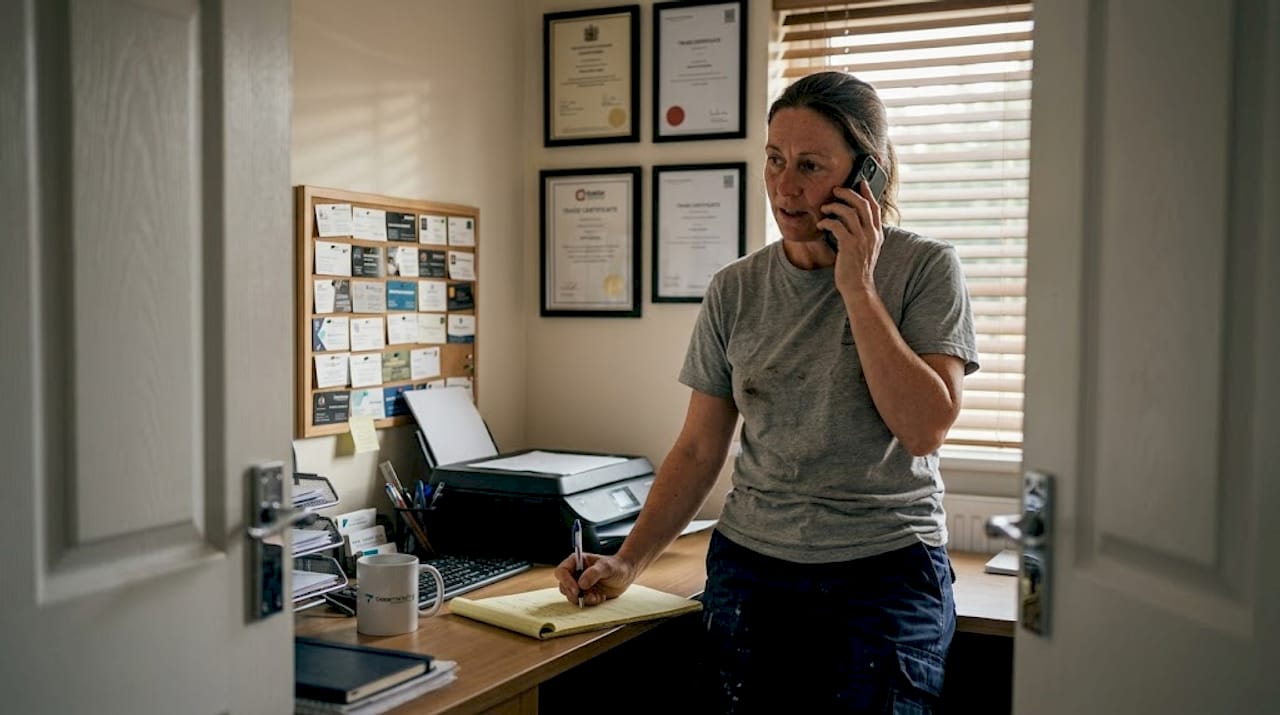
Residential and commercial positioning calls for separate messaging and sections, because what a homeowner needs to hear is very different from what a facilities manager wants to read.
Here is a quick comparison:
| Element | Residential focus | Commercial focus |
|---|---|---|
| Tone | Warm, reassuring, family-friendly | Professional, compliance-driven |
| Key services | Safety checks, renovations, fault finding | Fit-outs, switchboard upgrades, compliance |
| Trust signals | Reviews, photos of home work, local suburb mentions | Industry certifications, portfolio of projects |
| Call to action | "Book a free quote" | "Request a site assessment" |
Residential websites work best when they emphasise safety, affordability, and the peace of mind that comes from hiring a trusted local. Commercial sites need to highlight your experience with large-scale projects, regulatory compliance, and the ability to work within tight business timelines.
For attracting local clients in both segments, the smartest approach is separate landing pages or menu tabs for each audience. A homeowner in Box Hill should not land on a page talking about industrial switchboard upgrades.
Pro Tip: A responsive website design is essential for both segments. Whether a homeowner is browsing on a phone or a project manager is checking specs on a desktop, your site needs to perform on every screen.
If you serve both homeowners and businesses, create clear pathways for each from your homepage. Let visitors self-select so they land on content that speaks directly to their situation.
Lead-generation marketplace websites: Competing on platforms
Beyond your own website, there is a whole ecosystem of lead-generation platforms that Melbourne electricians use to fill their schedule. Hipages, Oneflare, ServiceSeeking, and Google Business Profile are among the most common.
These are not websites you own or control. They are profiles within third-party marketplaces, and they operate differently from a standalone site. The appeal is speed. You can set up a profile in a day and start receiving enquiries almost immediately, without waiting months for SEO to kick in.
Lead marketplace strategies form a real part of how electrical contractors generate digital leads, and many Melbourne sparkies report that 20 to 50% of their digital enquiries come through these platforms.
Here is a clear breakdown of the pros and cons:
- Pros: Quick setup, trusted by search engines, great for new businesses building a client base, no need for SEO expertise upfront.
- Cons: High competition from other tradies, cost-per-lead model can get expensive, limited control over your brand presentation, and no real loyalty from clients.
The smartest strategy is to use these platforms as a supplement, not a replacement, for your own site. When a lead-gen platform changes its pricing or algorithm, you want a website of your own to fall back on.
For a deeper look at electrician SEO strategies that reduce your dependence on paid platforms, investing in your own site pays off far better over the long run.
Comparing electrician website types: What works best and why
Now that you have seen each model in detail, here is a side-by-side comparison to help you decide what fits your business.
| Website type | Main goal | SEO impact | Best for |
|---|---|---|---|
| Emergency 24/7 | Capture urgent calls | High for urgent search terms | After-hours specialists |
| Residential | Win home jobs | Strong with suburb pages | Domestic-focused sparkies |
| Commercial | Win business contracts | Moderate, project-focused | Commercial contractors |
| Lead-gen marketplace | Fast early leads | Dependent on platform | New businesses |
As content architecture research confirms, matching your site's intent to how clients actually search is the single biggest factor in whether a website generates leads consistently.
Here is a simple decision process:
- Identify your best jobs. Where do most of your enquiries come from? Urgent callouts, homeowners, or business clients?
- Check your suburb reach. Are you targeting one area or multiple Melbourne suburbs?
- Assess your budget. A custom commercial site costs more upfront but delivers better returns for contractors targeting larger projects.
- Decide on a combination. Many successful Melbourne electricians run a residential-focused site with a dedicated emergency page bolted on.
- Plan for SEO from day one. Whatever type you choose, build suburb pages and local schema into the structure before you launch.
Combining the emergency model with a residential focus is a particularly effective approach for Melbourne sparkies who want to stay busy across both planned and urgent work.
What most sparkies get wrong (and how to avoid it)
Here is something we see time and again: a contractor picks a website based on what a competitor has, or simply chooses the best-looking template, and then wonders why the leads never come.
The uncomfortable truth is that a beautiful homepage does not equal a lead-generating website. What actually drives enquiries is how well your site maps to the way real clients search. An urgent call from someone with a tripped safety switch is a completely different search behaviour from a builder scoping a commercial fit-out. Your website needs to speak to those moments separately.
Start by sketching your site layout on paper before you brief any designer. Think about how your best jobs have come in. Was it a late-night call from a suburb you service regularly? A builder who found your commercial page? Those patterns should shape your navigation, your service pages, and your suburb targeting.
Electrician website conversion tips consistently point to one thing: matching your site's intent to local search behaviour produces more leads than any design trend.
Pro Tip: Sketch your site layout on paper based on how your best jobs come in. Whether that is by suburb, job type, or after-hours calls, let real enquiry patterns guide your page structure.
Next steps: Supercharge your electrician website
Armed with a clear picture of what works, the next step is putting it into practice. Whether you are starting fresh or reviewing what you already have, getting the foundations right makes all the difference.
At Troov Marketing, we help Melbourne electricians build websites that are fast, structured for local SEO, and designed to convert visitors into enquiries. If you are not sure where your current site stands, start with our website checklist for electricians to spot any gaps. Ready to build something better? Explore our approach to small business web design or learn how combining web design with local SEO can set your electrical business apart from the competition.
Frequently asked questions
What's the best type of electrician website for Melbourne contractors?
The best type depends on your main client base. Most sparkies see the strongest results with a site built around local intent and content architecture, whether that means suburb pages, emergency services, or residential and commercial splits.
Are lead-generation platforms as effective as having my own electrician site?
Platforms bring fast leads but owning your own site gives you stronger branding, better control, and long-term SEO gains that lead marketplace strategies simply cannot replicate.
What essential features should every electrician website have?
Every site needs fast loading, clear service area coverage, prominent contact details, and visible licensing or insurance. These are the foundations of effective website architecture that converts visitors into enquiries.
How do I balance emergency and regular service messaging on one website?
Use clear navigation with separate emergency and routine service pages. 24/7 landing-page patterns work well when kept distinct from your planned services so neither message gets diluted.
Should I split residential and commercial services on my website?
Yes. Separate messaging for each segment helps you target the right clients and improves search visibility for both residential and commercial job types.